

Charter crews live by checklists: provisions, water, weather routing, and safety gear. Transom lettering belongs on the same practical list because it affects photography, guest recognition, and handover disputes if vinyl lifts or gelcoat scars appear after a week of fenders and dock lines.
Before Guests Step Aboard: Document the Transom
Capture straight-on photos in soft morning light, close-ups of lettering edges, and any existing chips near the swim platform. If lettering is vinyl, note lifts or air pockets before departure. Those frames reduce arguments at charter return and help managers schedule refit touch-ups intelligently.
Temporary Vinyl vs Repeat-Season Metal
Cast vinyl can be the right tool for a short campaign when the paint system is sound and a professional installer handles surface prep. For owners who keep the same charter-facing name for multiple seasons, stud-mount stainless usually wins on durability, premium photography, and predictable maintenance—at the cost of careful first-time installation.
Review mounting realities on yacht sign fitting and installation before you commit to a drill pattern on a charter asset.
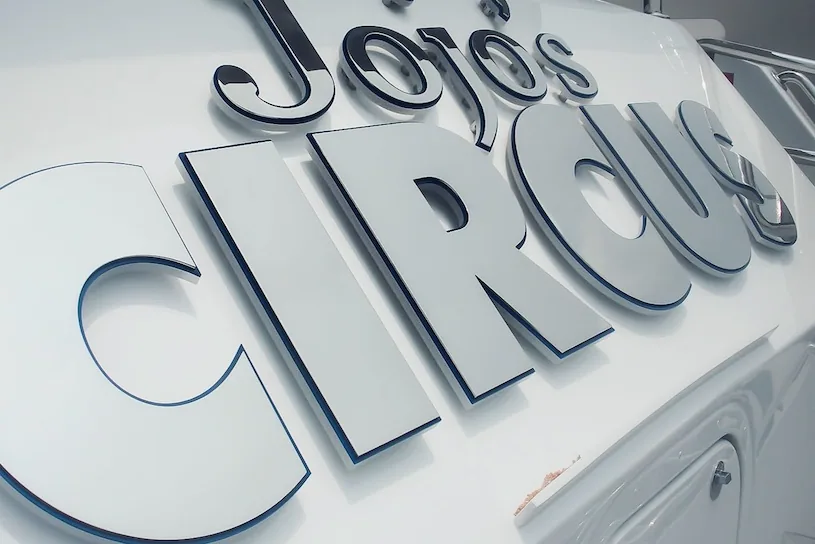
Backlit yacht name example — when metal letters make sense for repeat programs. Yacht Sign Fitting.
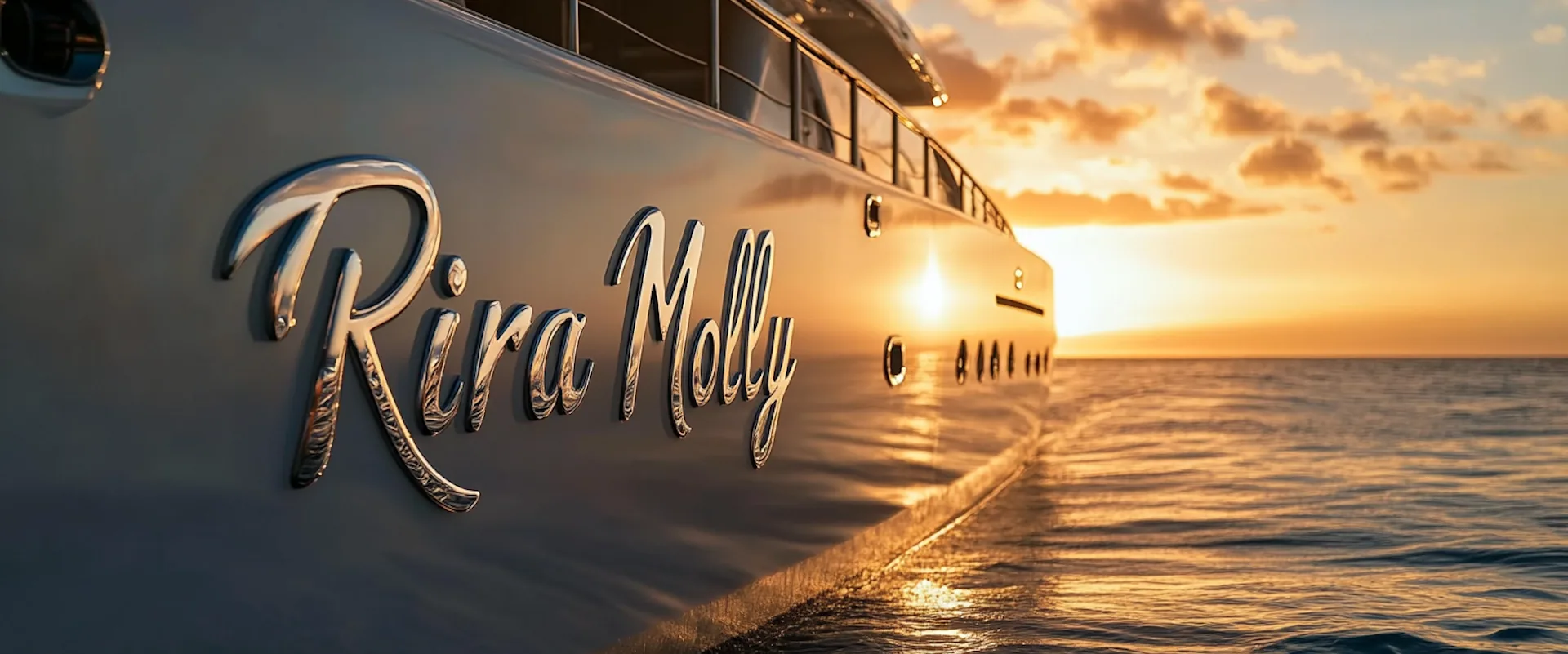
Clean typography yacht name sign for charter fleet consistency. View Portfolio.
Adhesive Residue, Hot Sun, and Line Handling
Tropical weeks combine UV, aggressive fender boards, and crew washing down with pressure washers. That combination exposes weak vinyl edges and can ghost adhesives on soft paint if removal is rushed. If the paint system is unknown, test hidden patches or schedule lettering work outside the turn-day window.
When Owners Upgrade to Custom Programs
Repeat charter owners often graduate from refreshed vinyl to fabricated metal wordmarks with optional halo LED once operating budgets support a durable upgrade. Start from custom yacht signage and products to see how 3D lettering, logos, and lighting stack into a single transom composition.
After metal is installed, keep care routines aligned with stainless maintenance so charter washdowns do not damage finishes.
Captain Checklist (Print-Friendly)
- Baseline transom photos at check-in, including lettering edges.
- Confirm name spelling matches documentation seen by guests.
- Verify lighting switches and fuses if the vessel carries illuminated letters.
- Carry spare fuses and a photo of the driver location for troubleshooting.
- Schedule lettering refit work outside peak turn days when possible.
Upgrading a charter fleet transom?
FAQ
Cast vinyl can work for short campaigns when the substrate is clean and professionally prepped. Watch for edge lifting in hot sun or from line handling. Photograph the transom before and after application for handover documentation.
Stable commercial names across multiple seasons benefit from metal durability and cleaner photography than annual vinyl refreshes. Stud mounting demands correct sealing—review yacht sign fitting before locking drill patterns.
Use professional prep, correct vinyl series for marine UV, and removal heat per manufacturer guidance. Test hidden patches on unknown paint systems; sometimes a refit window beats risky last-minute adhesive work.
Straight-on transom shots, lettering edge close-ups, fender-board wear zones, and official marks. Those images protect both sides if lettering damage is disputed at return.
Add electrical verification—fuses, switches, dimming—and simple guest-facing instructions on the joinery packet. Keep controls labeled if hulls rotate across regions.


