

Illuminated yacht lettering lives on the most exposed surface on the vessel: salt spray, pressure washdowns, thermal cycling, and stern waves all punish LED assemblies that were never designed for marine duty. Waterproofing is not a sticker on a datasheet—it is a system of potted modules, sealed harnesses, correct penetrations, and disciplined installation. Whether you are specifying a new build, planning a yacht refit, or reviewing quotes from a shipyard sign supplier, understanding IP67 vs IP68 helps you ask better questions before cable paths are frozen.
Why Transom LED Is Harder Than Interior Lighting
Interior LED strips fail quietly in a joinery locker. Exterior illuminated yacht sign fails in ways owners notice immediately: flicker after the first heavy rain, corrosion at a stud bore, or a dead section after the crew pressure-washes the swim platform.
Marine exposure stacks multiple stressors that lab IP tests only approximate one at a time:
- Salt mist and chloride film that tracks into any capillary path around fasteners.
- UV and heat on dark transoms that accelerates sealant aging and cable jacket fatigue.
- Vibration and flex from passage-making that works strain-relief points loose over seasons.
- Washdown discipline that varies crew to crew—especially on charter programs.
That is why serious custom yacht sign programs treat ingress protection as a fabrication plus installation requirement—not a single component label.
What IP Ratings Actually Mean (IEC 60529)
Ingress Protection (IP) codes come from IEC 60529. The first digit addresses solid-particle protection; the second addresses water. For yacht owners, the second digit is usually the focus—but both matter when salt crystals and spray coexist on a transom.
- First digit (0–6): dust and object ingress. Rating 6 means dust-tight under defined test conditions.
- Second digit (0–9): water ingress resistance, from dripping to high-pressure jets to immersion.
Important nuance: IP tests occur in controlled labs. A module that passes IP67 in a tank does not automatically forgive a poorly sealed gelcoat penetration, a pinched O-ring, or a consumer strip spliced in the yard. Real-world waterproofing for backlit yacht signs is always assembly plus install.
IP67 vs IP68: Side-by-Side
Both IP67 and IP68 imply dust-tight enclosures. The practical difference for LED yacht lettering is how each rating treats immersion—and who defines the test depth and duration.
| Rating | Test summary (IEC 60529) | Typical yacht transom use |
|---|---|---|
| IP67 | Immersion to 1 m depth for 30 minutes under defined conditions | Stud-mount halo modules, cable junctions above the splash line, most name-block installations |
| IP68 | Immersion beyond IP67—depth and duration defined by manufacturer | Letters low on the transom, swim-platform proximity, heavy washdown or charter programs needing extra margin |
Neither rating replaces correct marine-grade LED waterproofing practice: potting, gland class, driver location, and penetration sealing still determine whether the system survives year three in the Caribbean.
How We Build Marine-Grade LED Assemblies
Fabrication strategy separates signs that survives salt seasons from assemblies that look fine in a showroom photo. Our approach layers mechanical protection, active sealing, and electrical discipline.
1) LED module potting and encapsulation
Raw LED boards left open to humidity will fail. Marine programs use potting or encapsulation—typically epoxy or polyurethane compounds—around modules to exclude moisture and stabilize thermal paths. The goal is not merely to pass a one-time immersion test; it is to resist cyclic condensation when hot transoms cool at night in humid anchorages.
2) Pre-terminated sealed harnesses and cable glands
Field-spliced connections are the most common failure point on exterior letters. Factory-terminated harnesses with appropriate cable glands reduce variables at the yard. Gland class, torque, and compatible jacket materials should be documented on the drawing set—not left to whichever electrician is available on launch week.
3) Stainless letter body as mechanical shield
316L stainless steel letter bodies protect optics from impact and provide a stable mounting platform. Metal structure does not replace electrical sealing, but it reduces UV exposure to internal components and supports consistent standoff geometry for halo diffusion.
4) Driver location strategy
Drivers belong in dry or protected spaces whenever possible—joinery lockers, dedicated boxes with documented access, or interior zones specified with the AV integrator. Keeping high-maintenance electronics off the wet transom simplifies service and reduces salt exposure on terminals.
5) Factory QC before crating
Continuity checks, visual seal inspection, and photography of gland terminations should occur before shipment. For single-color LED yacht letters and more complex programs alike, QC documentation helps refit teams verify nothing shifted in freight.
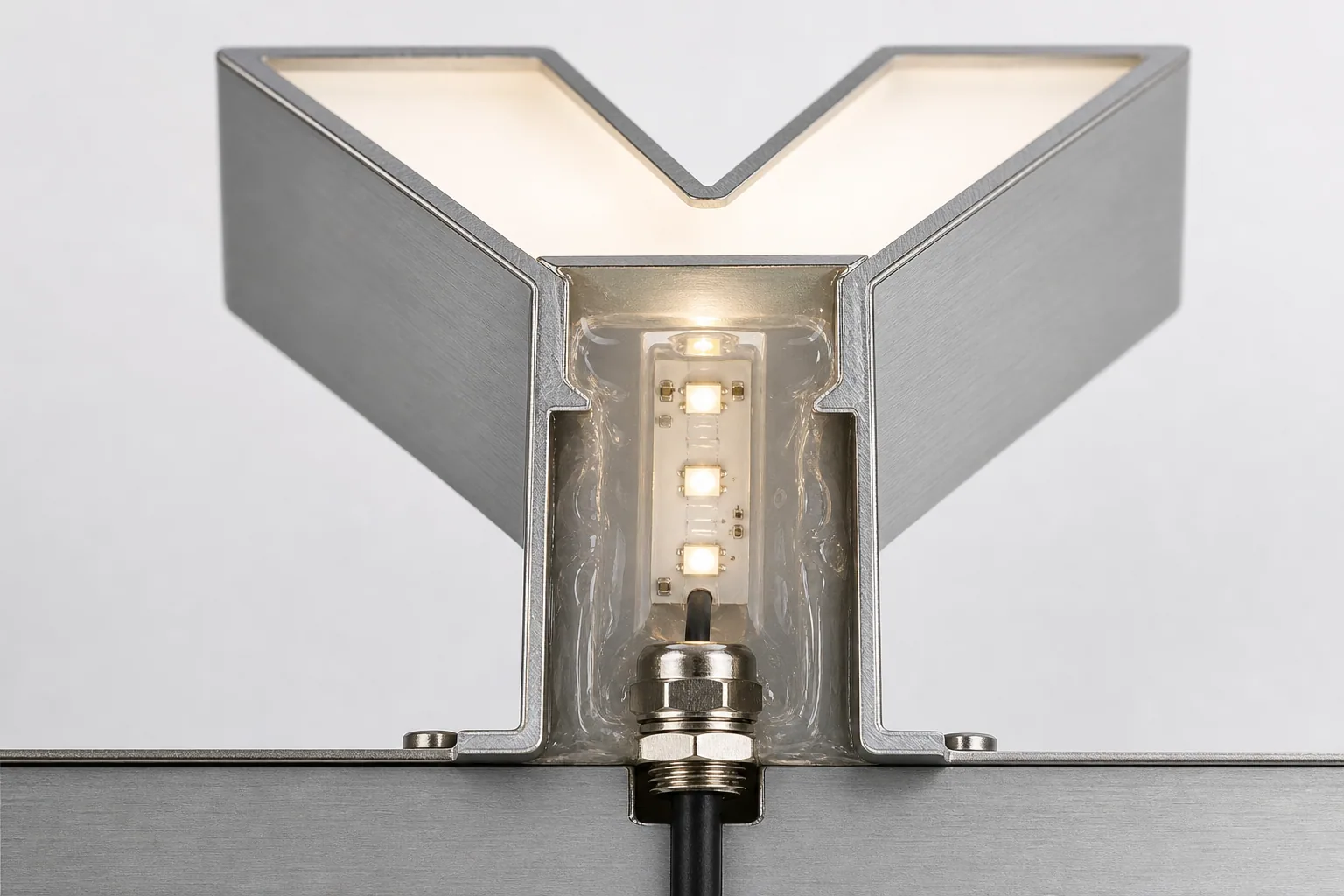
Potted LED modules inside stainless channels — encapsulation excludes salt mist from live circuits. Lighting Options.
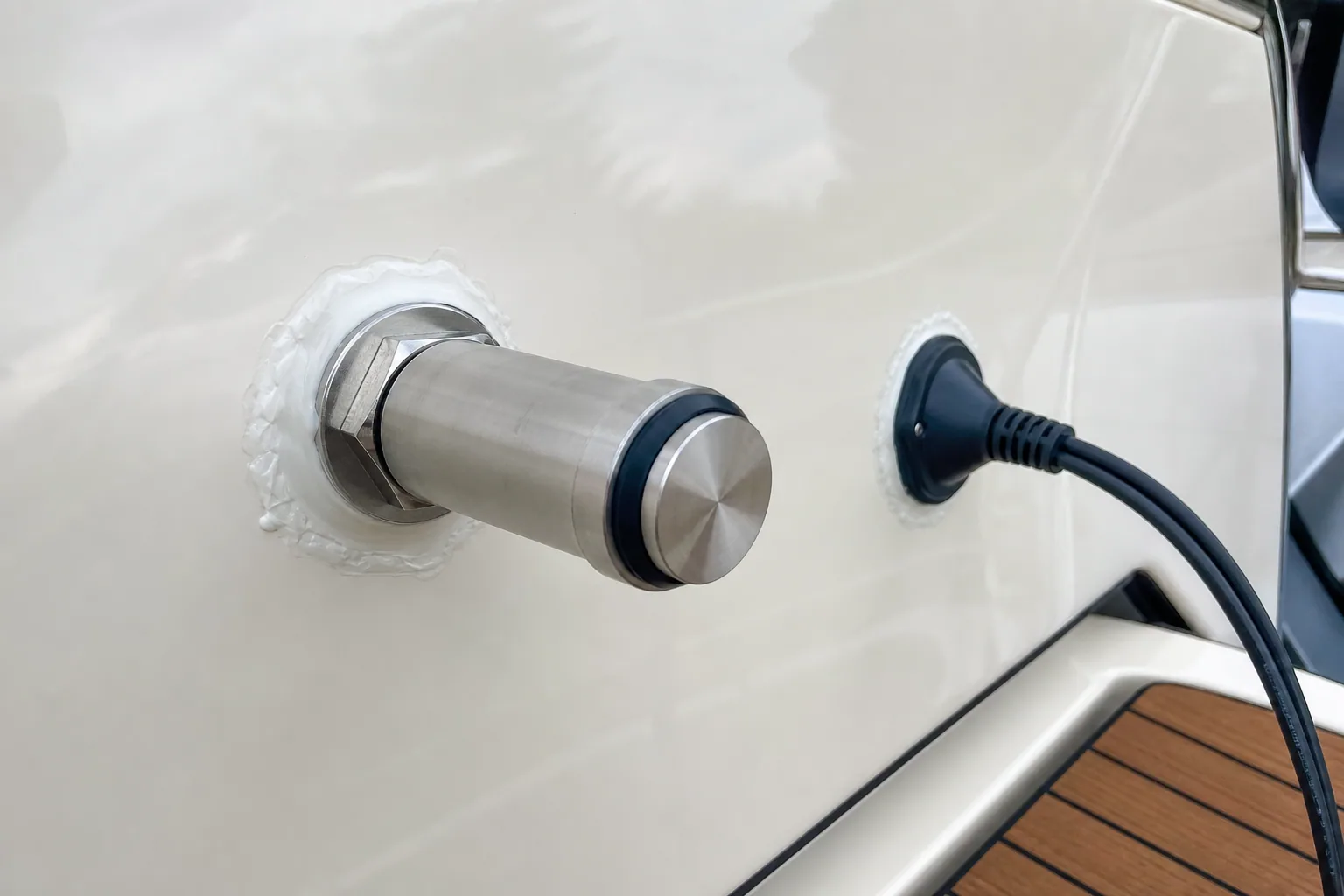
Sealed stud penetrations and strain relief — installation completes the waterproofing system. Yacht Sign Fitting.
Installation Is Part of the Waterproofing System
The best potted module still fails if the yard drills a transom hole and seals it with the wrong compound—or if a pressure washer blasts directly at an unprotected gland. Review installation and yacht sign fitting guidance before penetrations are cut.
- Stud bore sealing: compatible marine sealant, correct cure window, and torque discipline on fasteners.
- Strain relief: cables must not pull on solder joints or gland bodies when letters are serviced.
- Penetration planning: route runs where future paint and fairing will not compromise access.
- Dissimilar metals: isolate hardware where stainless meets aluminum or carbon fittings to reduce galvanic paths that corrode around seals.
Common failure modes we see in the field:
- Consumer LED strips specified to save cost, then potted as an afterthought.
- Junctions buried where neither crew nor yard can inspect them without removing interior panels.
- Missing documentation on driver location—so troubleshooting becomes destructive.
For night-read programs, pair sealing discipline with optical planning in LED yacht lettering for night approach.
Spec Checklist for Owners, Captains, and Shipyards
Print this frame for your refit folder or yard meeting:
- Target IP rating (IP67 vs IP68) tied to mounting height and washdown exposure.
- Potting or encapsulation method documented—not assumed from a supplier brochure.
- Cable gland class, jacket type, and factory vs field terminations.
- Driver location, fuse or breaker ID, and dimming intent on the electrical drawing set.
- Penetration sealant specification and cure time relative to paint schedule.
- Post-install inspection steps after first season and after major washdown events.
- Spares policy: drivers, connectors, or modules for business-critical yachts.
Shipyards integrating signs early reduce rework. Share transom photos and lighting intent from how it works so LED routing aligns with paint, fairing, and AV schedules—not the night before sea trials.
When IP67 Is Enough vs When to Specify IP68
Use this decision frame—not as rigid rules, but as a starting point for your integrator conversation:
- IP67 is often sufficient when: letters mount in the upper name block, cable exits route to protected zones, and washdown procedures avoid direct high-pressure blasting at glands.
- Consider IP68 when: letterforms sit near the swim platform, the vessel operates heavy charter washdowns, or intermittent submersion from stern waves is realistic in your cruising profile.
- Either rating fails when: installation sealing is rushed, consumer components are substituted, or penetrations are inaccessible for inspection.
Compare effect vocabulary on lighting options before you lock halo depth, diffusion, and electrical scope together. Warm white single-color LED remains the most common pairing for timeless evening presence without RGB programming complexity.
Lifecycle Cost: Cheap LED vs Marine-Grade Assemblies
Low-bid LED can win a PO and still lose the program when water ingress triggers an emergency yard visit before guest trips. Factor inspection time, driver replacement, and gelcoat rework into five-year models—not only first fabrication cost. Cross-check material context in best materials for yacht exterior sign and budget framing in yacht operating budgets for exterior sign.
Discuss LED sealing for your transom.
FAQ
What is the difference between IP67 and IP68 for yacht LED signs?
Both ratings indicate dust-tight enclosures. IP67 means protection against temporary immersion to 1 meter for 30 minutes under lab conditions. IP68 means the manufacturer defines a deeper or longer immersion test—often relevant when letters sit near swim platforms or heavy washdown zones. On a transom, correct potting, cable glands, and installation sealing matter as much as the printed rating.
Is IP67 enough for transom-mounted illuminated yacht lettering?
For most stud-mount halo and face-lit programs above the splash line, IP67 modules with proper encapsulation and sealed penetrations are sufficient when installed correctly. Specify IP68 when letters sit low on the transom, endure aggressive charter washdowns, or when your refit brief demands extra margin for intermittent submersion near the swim platform.
What waterproofing methods are used in marine-grade LED yacht signs?
Typical assemblies combine potted or encapsulated LED modules, pre-terminated sealed harnesses, marine-grade cable glands, stainless letter bodies as mechanical shields, and drivers located in dry or protected spaces. Factory QC should verify continuity and visual seal integrity before crating—not only rely on supplier IP labels.
Can pressure washing damage waterproof LED yacht lettering?
Yes, if penetrations lack strain relief or if consumer-grade strips were substituted. Use low-pressure freshwater rinses at a safe distance, avoid blasting directly at cable exits and stud bores, and inspect seals after each season. A valid IP rating does not forgive a failed gland or a drilled hole sealed with the wrong compound.
What should shipyards specify for LED ingress protection on custom yacht sign?
Document target IP rating, potting method, cable gland part class, driver location, penetration sealant type, strain relief requirements, and post-install inspection steps. Treat sign feeds as a marine electrical load with documented overcurrent protection—not a last-day add-on. Share mounting drawings early so LED routing aligns with paint and fairing schedules.


