

 Request a Quote
Owner-friendly maintenance routine for stainless boat letters in real marine conditions.
Stainless steel boat letters can stay bright and premium for years, but marine conditions are unforgiving. Salt spray, humidity, and sun exposure gradually leave deposits that cause dullness and surface discoloration. The good news is that a simple routine keeps your letters looking sharp without over-polishing or damaging the finish.
Quick Maintenance Schedule
- After each outing: rinse letters with low-pressure freshwater if you run in saltwater.
- Every 1-2 weeks: gentle wash with pH-neutral marine soap and microfiber cloth.
- Monthly: inspect edges, standoffs, and seal points for deposits or staining.
- Every 2-3 months: apply marine-safe stainless protectant in thin, even layers.
Tools and Products to Use (and Avoid)
Safe choices: pH-neutral soap, clean microfiber cloths, soft detailing brush, stainless-safe cleaner, and non-abrasive protectant.
Avoid: bleach, chlorine products, muriatic or strong acidic cleaners, steel wool, hard abrasive pads, and aggressive compound polishing.
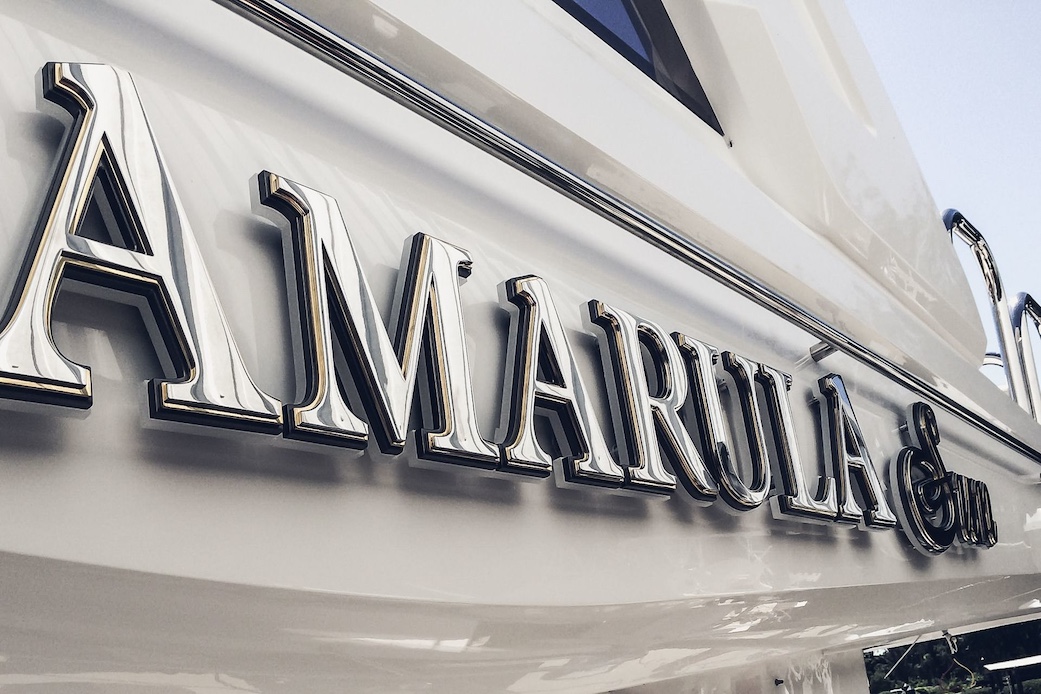
Backlit stainless yacht name — regular rinse cycles protect finish longevity. Materials Guide.
Step-by-Step: Routine Cleaning
- Pre-rinse first: flush away loose salt and grit before touching the surface.
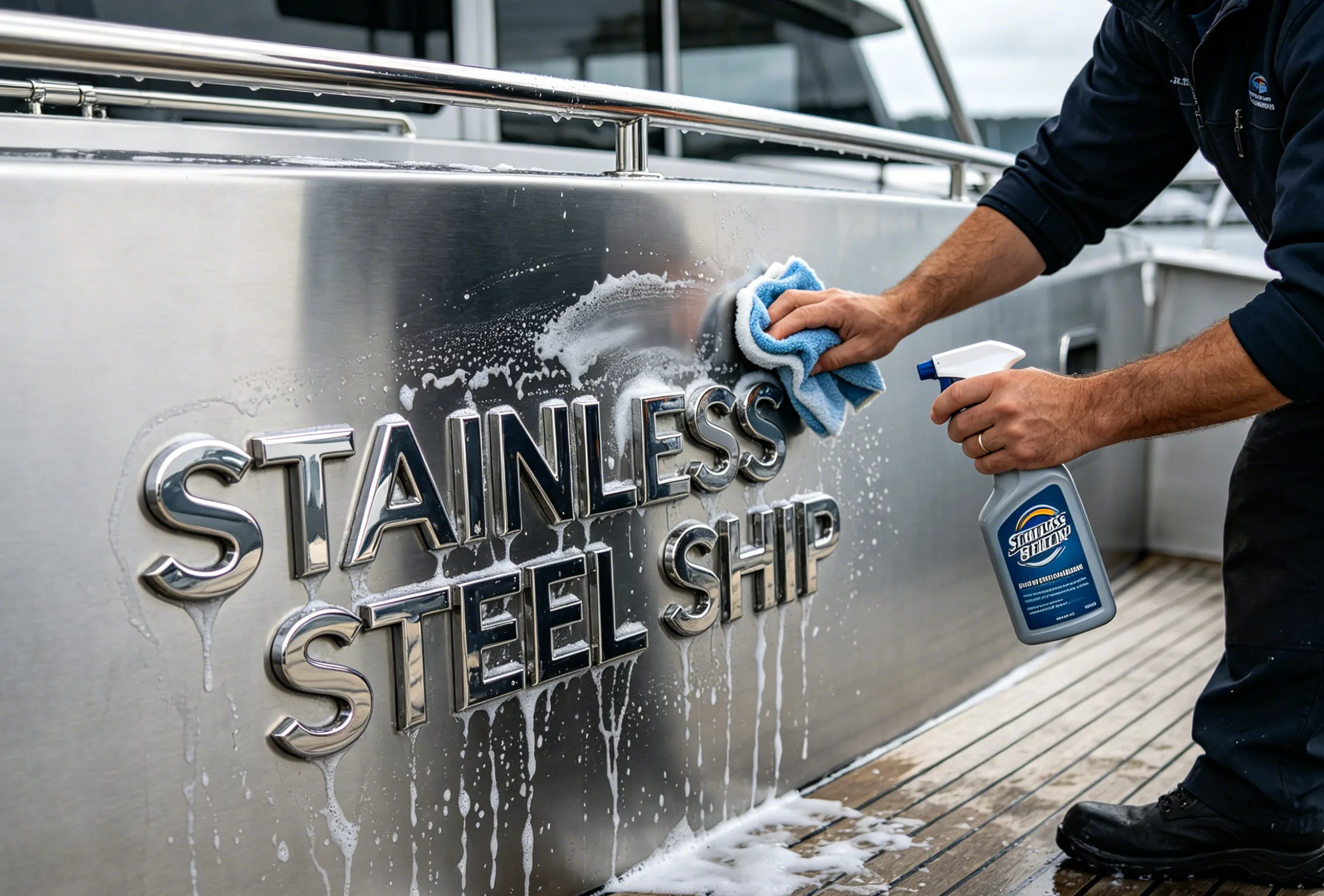
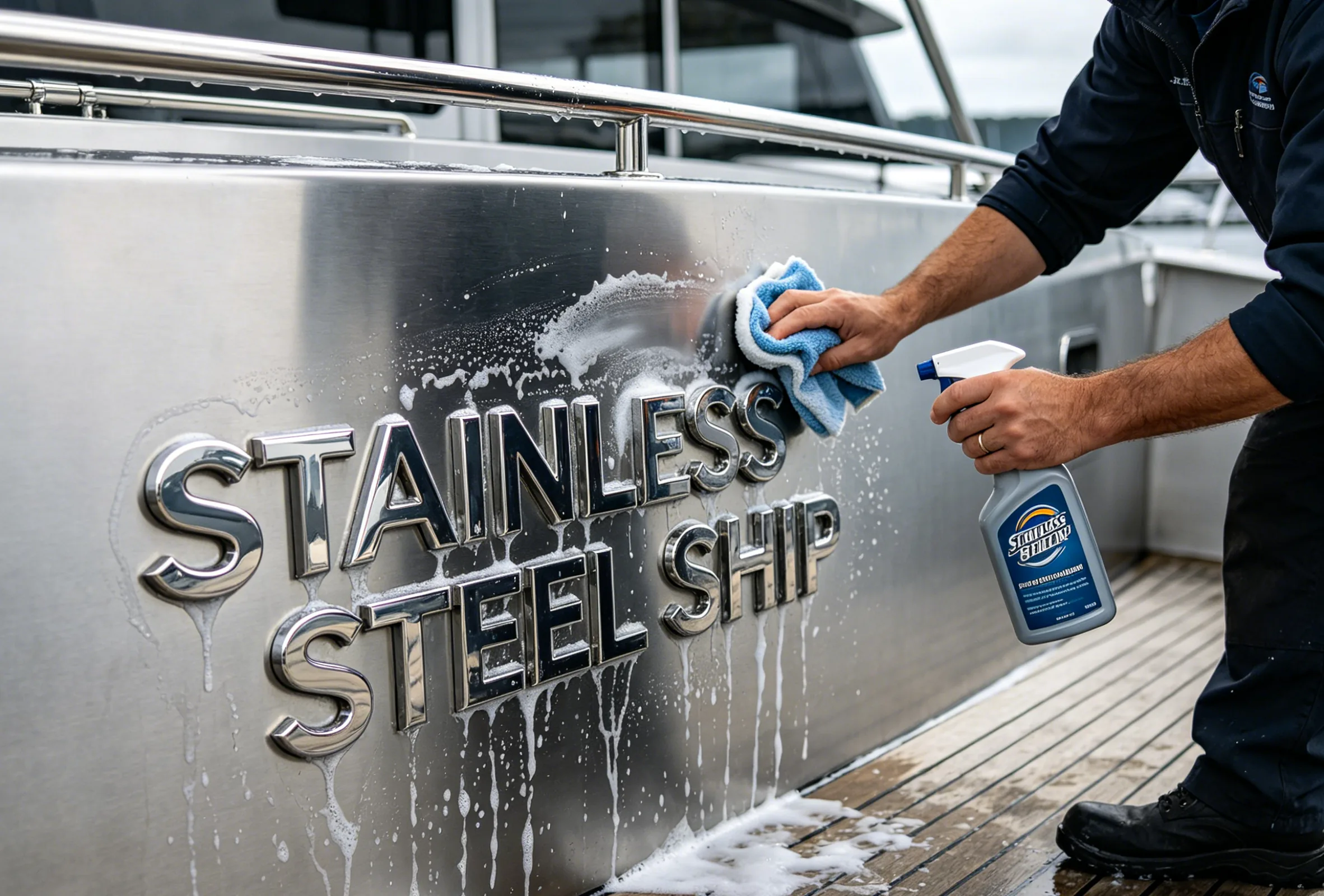
- Wash gently: wipe with soapy water using a clean microfiber cloth.
- Follow grain direction: on brushed finish letters, wipe with the grain to reduce visible swirls.
- Rinse thoroughly: remove all soap residue, especially around edges and mounting points.
- Dry completely: use a dry microfiber cloth to prevent water spotting.
How to Remove Tea Staining Early
Tea staining is a light brown film that can appear on stainless surfaces in coastal areas. It is usually superficial and should be treated early.
- Start with a dedicated stainless cleaner and light pressure.
- Work in small sections, rinse frequently, and check progress.
- Repeat if needed, then apply a protectant after the surface is clean and dry.
Corrosion Prevention Around Mounting Points
Most long-term issues begin around hardware and hard-to-rinse areas. Keep mounting zones clean and watch for trapped salt or moisture around standoffs and fasteners.
- Rinse around hardware from multiple angles.
- Use compatible marine hardware and isolate dissimilar metals where required.
- Inspect seals and cable exits on illuminated letters.
For more installation context, see Yacht Sign Fitting.
Mirror vs Brushed Finish Care
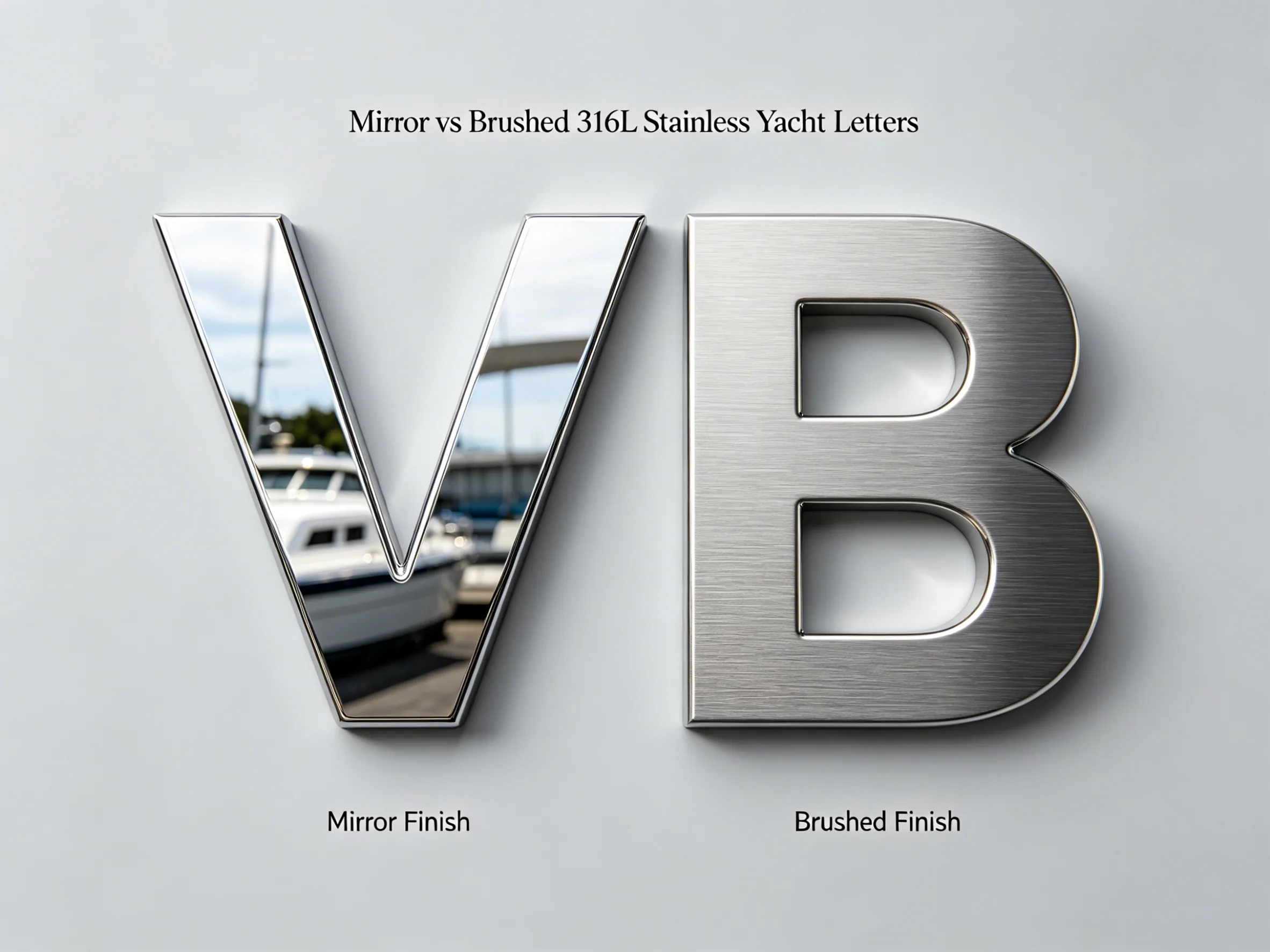
Mirror and brushed finishes need the same cleaning frequency, but handling technique differs. Mirror surfaces show fingerprints and swirl marks faster, while brushed finishes can hide light marks when wiped with the grain.
Compare finishes: Mirror Stainless Steel and Brushed Stainless Steel.
Do and Don't Checklist
| Do | Do Not |
|---|---|
| Rinse salt deposits frequently | Leave saltwater to dry repeatedly on the surface |
| Use pH-neutral marine soap | Use bleach or chlorine-based products |
| Use microfiber cloths | Use steel wool or hard abrasive pads |
| Dry after washing | Air-dry in direct salt breeze without wiping |
| Inspect fittings monthly | Ignore minor staining until it becomes heavy |
When to Seek Professional Help
Contact a professional if discoloration returns quickly after proper cleaning, if you notice pitting near hardware, or if illuminated letters show moisture or electrical issues. For material-level guidance, see 316L Stainless Steel.
Need help choosing stainless letter finish?
FAQ
Most owners do not need frequent heavy polishing. Regular rinsing and gentle cleaning are more important. If needed, use a marine-safe polish occasionally, not aggressively.
Use low pressure and keep distance. High pressure close to seals, edges, or LED cable routes can cause problems over time.
Waiting too long between salt removal cycles. Small, frequent rinses and gentle washes are much safer than occasional aggressive cleaning.
Routine care is similar, but 316L is typically more forgiving in marine chloride exposure. If your yacht lives in saltwater year-round, frequent rinsing still matters for any stainless grade.
Get a Quote for Your Project
Share your yacht name, mounting photos, and finish preferences. A specialist will respond within one business day.
Need Help Choosing Stainless Letter Finish?
Share your yacht environment and finish preference. We can recommend a maintenance-friendly configuration for your project.