

Before illuminated letters leave the workshop, captains and marine electricians ask a practical question: will this sign match our DC bank—12V or 24V—without brown-out, flicker, or a surprise amp draw on an already busy panel? Understanding how 12V vs 24V LED systems behave on luxury vessels turns that question into a clear specification instead of a dockside improvisation. Whether you are locking a naval architect specification, planning a yacht refit, or reviewing a quote from a shipyard sign supplier, voltage is as important as font and finish.
Why Vessel Voltage Matters for Illuminated Lettering
Yacht lettering is not a 12-volt automotive strip taped behind acrylic. It is a sealed marine assembly that must hold brightness across long cable runs, salt exposure, and thermal cycling on the transom. System voltage shapes current, conductor size, connector choice, and how cleanly the glow reads at night—topics that sit next to waterproofing in any serious illuminated yacht signage brief.
- Current and heat: For the same wattage, 12V draws roughly twice the amperage of 24V, so terminations and potting see more thermal stress if undersized.
- Voltage drop: Long runs from a midships distribution board to the stern punish 12V harder; dim corners and warm-to-cool color shift are common symptoms.
- Panel real estate: Correct fusing and dedicated circuits keep lettering from sharing noisy loads with windlasses or thrusters.
Pair electrical intent with the IP strategy covered in marine-grade LED waterproofing (IP67 vs IP68)—a dry connector on the wrong voltage is still a failure waiting for the first heavy washdown.
How 12V vs 24V LED Systems Work on Board
Most pleasure craft and many mid-size motor yachts still center on 12V DC house banks. Larger luxury vessels and commercial-leaning builds often standardize on 24V for lighting and accessory loads because higher voltage moves the same power with less copper. Custom backlit yacht signs simply need to be designed as citizens of whichever bus you already trust.
Inside each letter, LEDs are driven at controlled current. The “12V” or “24V” label on a marine letter set refers to the input the driver or module expects—not a promise that any LED will tolerate either bank. Feeding a 12V module from 24V without a proper DC-DC stage overdrives the electronics; feeding a 24V module from 12V usually yields a weak, uneven halo or no light at all.
- 12V systems: Familiar to most yards; excellent for shorter cable paths and smaller nameplates; demand careful gauge selection on long stern runs.
- 24V systems: Preferable for large letter spans and distant feed points; lower current eases connector and fuse sizing when wattage climbs.
- Hybrid vessels: Some yachts keep 12V for electronics and 24V for lighting—lettering must follow the circuit that will actually switch it, not the “house average.”
12V vs 24V: Practical Comparison for Yacht Signs
Use this comparison when captains, owners, and the shipyard electrician align on a lighting options package before fabrication starts.
| Criteria | 12V LED lettering | 24V LED lettering |
|---|---|---|
| Typical vessels | Many motor yachts and sailboats with 12V house banks | Larger luxury builds and vessels with 24V lighting buses |
| Current for same watts | Higher (~2×) | Lower (~½) |
| Long cable runs | More sensitive to voltage drop; heavier tinned cable often required | More forgiving over distance to the transom |
| Brightness | Set by drive current and optics—not automatically dimmer | Set by drive current and optics—not automatically brighter |
| Refit complexity | Easy if existing 12V circuit capacity and polarity are clear | Best when 24V feed and switching already exist near the install zone |
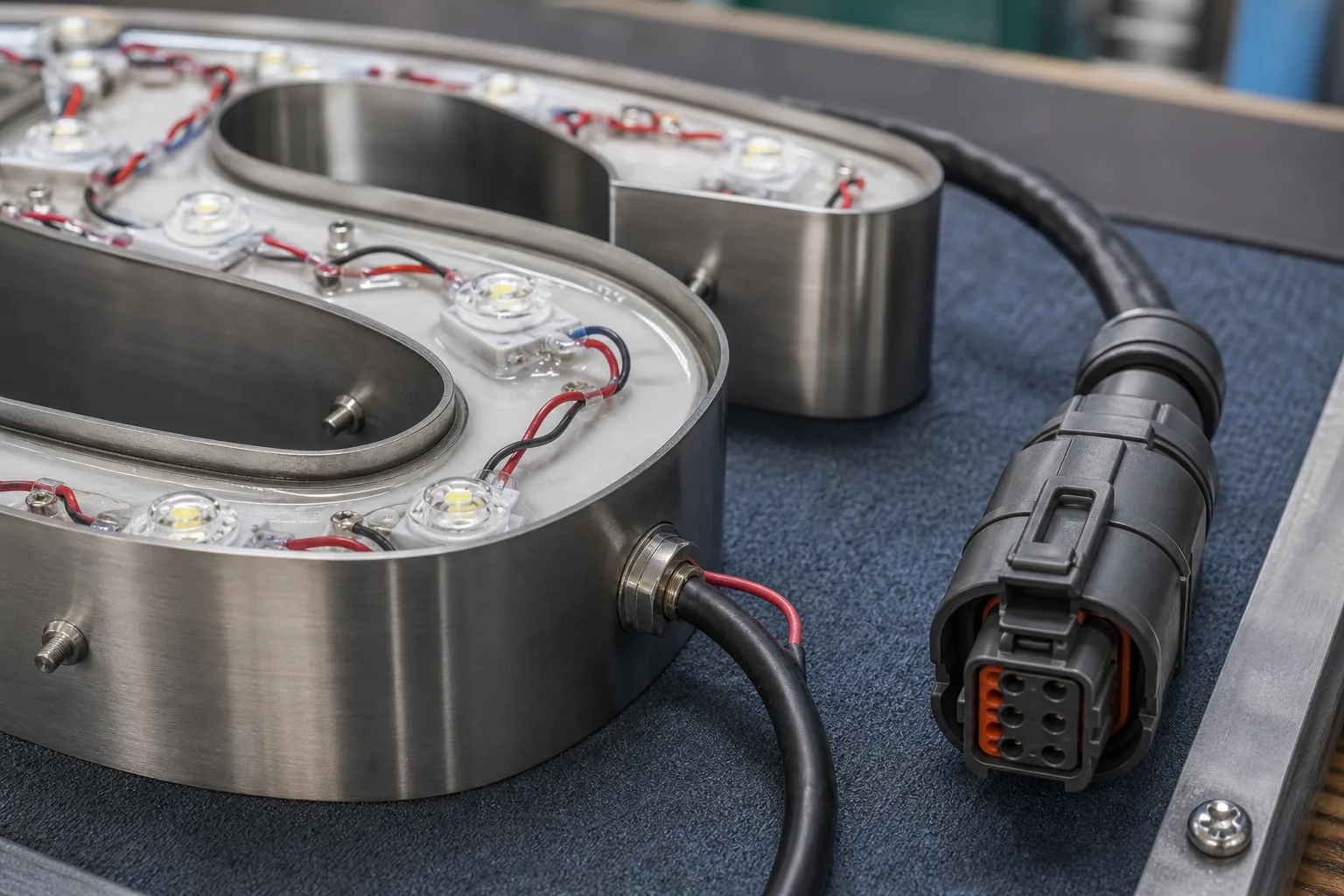
Potted modules and sealed harnesses must match system voltage. Single Color LED.
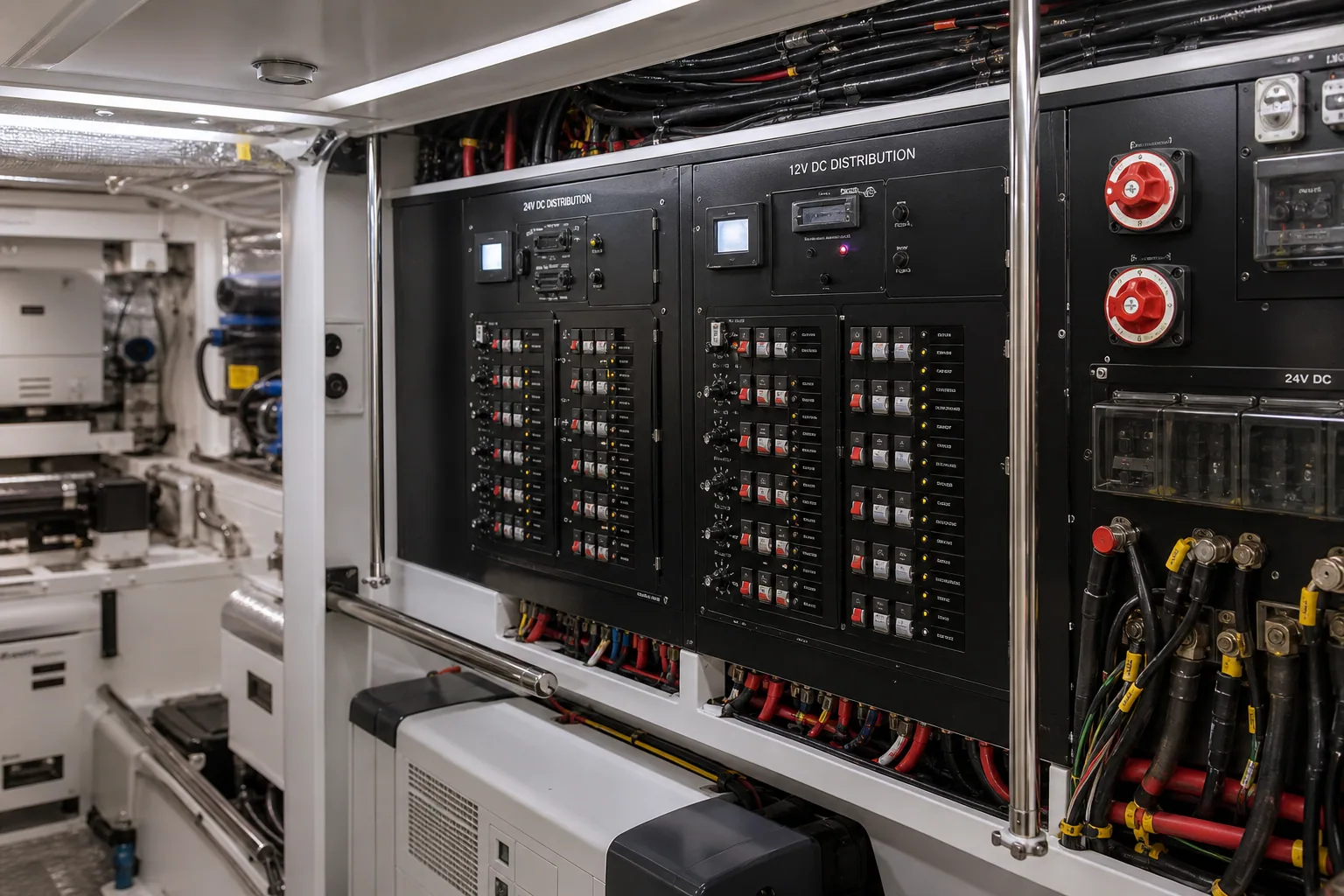
Confirm the switched DC circuit before fabrication. Installation guide.
How Custom Letters Are Matched to Your Power System
A capable fabricator does not ship a generic “marine LED” and hope the polarity sticker is enough. For custom yacht signage, electrical matching is part of the build pack—alongside CAD outlines and finish samples.
- Voltage-specific modules: LED boards and constant-current stages are selected for the confirmed nominal DC voltage.
- Load sheet: Total watts and expected amps at 12V or 24V are listed so the yard can reserve breaker capacity.
- Harness length and gauge: Feed length estimates inform tinned marine cable size and whether local DC-DC conversion is wiser than a heroic copper run.
- Control path: Simple on/off, dimming, or RGB light show control is coordinated so controllers and letters share one voltage family.
- Termination standard: Waterproof connectors, strain relief, and labeled polarity reduce install errors during a compressed yard period.
Night presence still depends on even illumination and letter stand-off—see LED yacht lettering at night—but none of that optics work survives a starved or overdriven supply.
New Build vs Yacht Refit: Specifying Voltage Early
On a new build, the naval architect and electrical designer can place a dedicated fused feed near the lettering zone, sized for the approved load sheet. During a refit, the constraint is often an existing penetration, a shared lighting circuit, or a panel already near capacity—so voltage confirmation belongs in the same week as artwork freeze and lead-time planning covered in refit yard timing for custom lettering.
- Measure first: Confirm nominal voltage under load at the intended tap—not only the label on the battery switch.
- Isolate the circuit: Prefer a dedicated breaker for exterior lettering so thruster or windlass events do not dim the name.
- Document polarity: Red/black conventions vary by yard; labeled leads beat assumptions.
- Plan the switch: Helm switch, lighting Contactor, or smart lighting bus—each changes where voltage must be stable.
Fitting details—stud patterns, sealant, and access—live in the yacht sign fitting workflow; voltage is the invisible twin of that mechanical plan.
Know your bank voltage before letters are potted.
Installer Checklist: Captains and Marine Electricians
Use this list before the sign ships or before the first hole is drilled in gelcoat.
- Nominal system voltage confirmed (12V or 24V) and noted on the purchase order.
- Estimated cable run length from fuse to furthest letter, with calculated voltage drop.
- Breaker or fuse rating matched to load sheet with appropriate margin—not shared with high-inrush gear.
- Tinned marine cable, correct gauge, and sealed connectors rated for the wet zone.
- Polarity labels on both harness and vessel side; continuity check before final sealant cures.
- Controller or dimmer (if any) voltage-matched; no mixed 12V/24V modules on one bus.
- Post-install soak and night check: even glow, no flicker under generator vs shore power transitions.
When those boxes are checked, custom illuminated letters behave like any other well-specified DC load on a luxury vessel—quiet, predictable, and ready for guests on the approach.
FAQ
Can I run 12V LED yacht letters on a 24V DC system?
Not directly. A 12V LED assembly needs a regulated 12V supply. On 24V vessels, use letters specified for 24V, or a marine DC-DC converter sized for the load with correct polarity, fusing, and waterproof terminations. Never drop voltage with a random resistor in a wet location.
Does 24V make yacht lettering brighter than 12V?
Brightness is set by LED current and optical design, not by system voltage alone. A properly driven 12V halo can match a 24V build at the same lumen target. The 24V advantage is lower current for the same wattage, which reduces voltage drop on long cable runs to the transom.
What wire gauge do I need for backlit yacht letters?
Size conductors for amperage and run length so voltage at the letters stays within the LED driver's tolerance. Longer 12V runs often need heavier tinned marine cable than equivalent 24V circuits. Your shipyard electrician should calculate drop from distribution panel to the furthest letter and fuse at the source.
Should voltage be locked before ordering custom illuminated letters?
Yes. Confirm nominal DC voltage, available circuit capacity, switching method, and any RGB controller requirements before fabrication. Changing voltage after LEDs are potted usually means a full electrical rebuild of the sign, not a simple harness swap.
How do RGB controllers fit 12V or 24V yacht LED lettering?
RGB and RGBW controllers must match the lettering voltage and current. Controllers, amplifiers, and letter modules should be one coordinated marine package—mixed voltages cause color shift, flicker, or early failure. Specify controller location, IP rating, and control protocol during the yacht refit electrical plan.


