

On illuminated yacht lettering, the metal you see first is only half the system. The translucent face or rear diffuser—almost always acrylic vs polycarbonate—controls how light spreads, how the name reads at dusk, and whether the glow stays crystal-clear after seasons of sun and salt. Whether you are planning a yacht refit, writing a naval architect specification, or comparing quotes from a shipyard sign supplier, choosing the right optical plastic is as important as choosing 316L for the letter body.
Why Diffuser Material Matters on Backlit Yacht Letters
Backlit yacht signs put plastic in a harsh microclimate: UV on open decks, heat soak on dark gelcoat, salt mist, and occasional impact from tenders or washdown gear. A diffuser that looks identical in a showroom can diverge sharply after two Caribbean summers—one stays clear and even; the other turns yellow, hazy, or brittle.
Owners and captains usually care about three performance axes:
- UV resistance: how the sheet holds optical clarity and mechanical strength under solar load.
- Impact resistance: how it survives contact, vibration, and handling during install or charter seasons.
- Yellowing and haze: how color temperature and light transmission drift over time—critical for premium evening presence.
Pair this plastics decision with metal context in best materials for yacht exterior signage and sealing practice in marine-grade LED waterproofing.
Acrylic (PMMA) for Illuminated Yacht Lettering
Acrylic—polymethyl methacrylate (PMMA)—is the default optical plastic for luxury illuminated yacht signage. Marine-oriented grades are formulated for high light transmission, smooth diffusion when frosted or laser-etched, and strong resistance to yellowing when UV stabilizers are correctly specified.
- Optics: excellent clarity and consistent glow; frosted acrylic softens LED hotspots for halo and face-lit effects.
- UV and yellowing: UV-stable acrylic generally outperforms unprotected polycarbonate for color hold on sunny transoms.
- Machinability: clean laser cutting and polished edges suit custom letterforms and tight stainless channels.
- Trade-off: more brittle than polycarbonate—sharp impact can chip or crack a face panel if the stainless body does not shield it.
For most owner and new-build programs prioritizing timeless evening light—especially warm single-color LED halo—acrylic remains the first recommendation inside a 316L stainless enclosure.
Polycarbonate (PC) When Impact Comes First
Polycarbonate is the toughness specialist. At similar thickness it absorbs impact energy far better than acrylic, which is why it appears on industrial guards, safety glazing, and high-abuse exterior signs.
- Impact strength: preferred near swim platforms, busy charter decks, or routes where tenders and toys contact the stern often.
- Flexibility: less prone to catastrophic cracking under vibration and handling.
- UV caveat: standard PC yellows and hazes under marine UV unless it includes a UV-resistant coating, co-extruded layer, or protective film.
- Optics caveat: even clear PC can show more scatter and surface sensitivity; coatings must stay intact through cleaning cycles.
If your brief prioritizes mechanical abuse over absolute optical purity, specify UV-protected polycarbonate explicitly—and require the coating method on the drawing set, not a brochure claim.
Acrylic vs Polycarbonate: UV, Impact, and Yellowing
Use this side-by-side when owners, captains, and yards align on diffuser selection for backlit yacht letters:
| Criteria | UV-stable acrylic (PMMA) | Polycarbonate (PC) |
|---|---|---|
| UV resistance | Strong with marine UV grades; clarity holds well in tropical sun | Requires UV coating or stabilized grade; unprotected PC degrades faster |
| Impact resistance | Moderate; can chip or crack under sharp hits | Excellent toughness; preferred for high-abuse mounts |
| Yellowing / haze | Generally superior long-term color stability | Higher yellowing risk without UV protection; haze reduces glow quality |
| Optical clarity | Excellent; favorite for even halo diffusion | Good when clear and coated; can look less “crystal” over time |
| Typical yacht use | Most luxury face/rear diffusers in stainless letters | Charter, low mounts, impact-prone or expedition programs |
Neither plastic replaces correct LED sealing, stud penetrations, or driver placement—optics fail quietly when moisture and heat attack the assembly from behind. Review lighting options alongside plastic choice so diffusion thickness, LED density, and power architecture stay coherent.
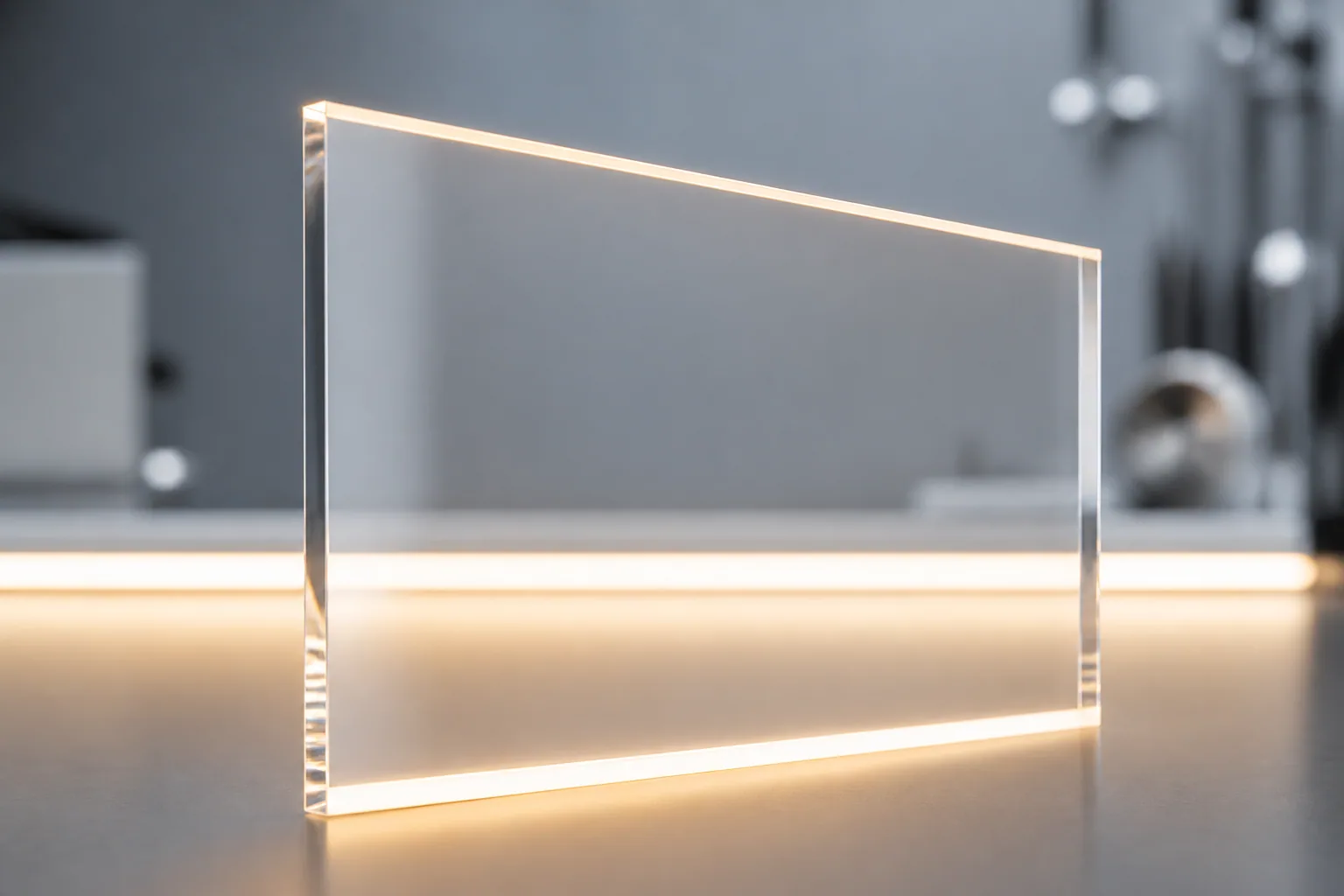
UV-stable acrylic — preferred clarity and yellowing resistance for most illuminated letter faces. Lighting Options.
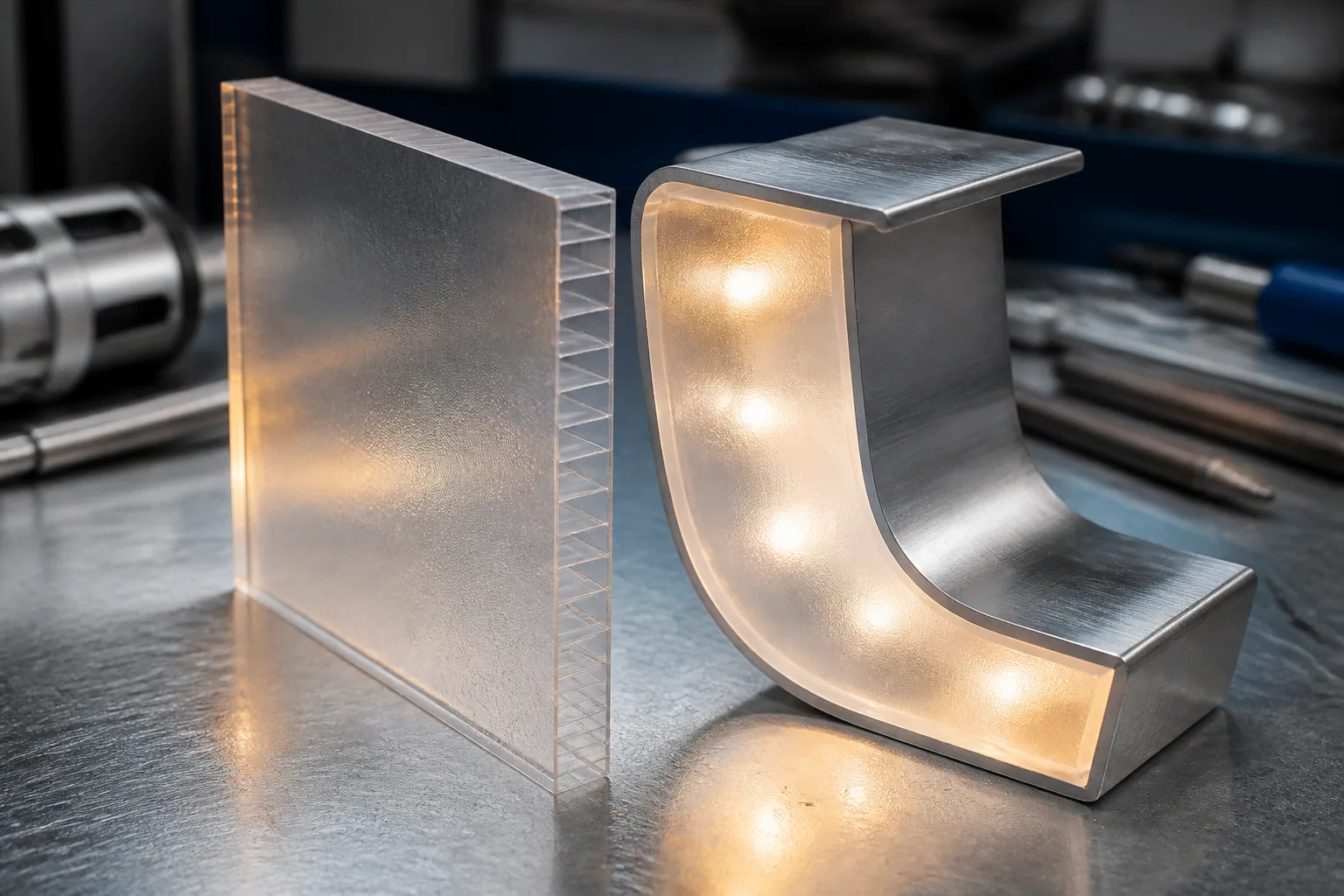
UV-protected polycarbonate — toughness first when impact risk is high. Custom Yacht Signage.
How Yellowing Shows Up on the Transom
Yellowing is not only a cosmetic complaint—it changes how guests read the name at night. A warm-white LED behind a yellowed diffuser shifts toward muddy amber; cool white can look dirty; RGBW scenes lose color accuracy. Haze scatters light into a foggy bloom that softens letter edges and reduces contrast against dark gelcoat.
- Early signs: uneven tint near the upper letter edges that see the most sun.
- Progression: reduced transmission forces higher LED drive levels, raising heat and accelerating further aging.
- Prevention: specify UV-stable acrylic or coated PC, avoid non-marine hobby plastics, and keep cleaning chemicals compatible with the face material.
For night-read planning after material selection, see LED yacht lettering for night approach.
Spec Checklist for Owners, Captains, and Shipyards
Put these lines on your custom yacht sign inquiry or yard meeting agenda:
- Diffuser polymer: UV-stable acrylic vs UV-protected polycarbonate—named grade, not generic “clear plastic.”
- Thickness and finish: clear, frosted, or opal; edge polish; retention method inside the stainless channel.
- UV protection method for PC: coating, co-extrusion, or film—plus expected service life in your cruising latitudes.
- LED pairing: color temperature, density, and waterproofing rating aligned with IP67 vs IP68 guidance.
- Mounting height and abuse profile: swim-platform proximity, charter washdowns, tender traffic.
- Cleaning protocol: freshwater rinse only; no abrasive pads or solvent cleaners that attack coatings.
Share transom photos and lighting intent early via how it works so plastic, metal, and electrical scope lock together before paint schedules freeze.
Which Should You Choose?
A practical decision frame for most programs:
- Choose UV-stable acrylic when: optical clarity, even halo, and long-term anti-yellowing matter most—typical private yachts and premium new builds.
- Choose UV-protected polycarbonate when: impact toughness is non-negotiable—charter fleets, expedition sterns, or low letters in the splash and contact zone.
- Default luxury stack: mirror or brushed 316L body + acrylic diffuser + sealed marine LED—then upgrade the plastic only if the risk profile demands it.
Cheap, non-UV plastics save little on a fabrication PO and cost more when a yard visit replaces yellowed faces before a guest trip. Spec the diffuser with the same seriousness as stainless grade and LED sealing.
Need help specifying acrylic or polycarbonate for your letters?
FAQ
Is acrylic or polycarbonate better for backlit yacht letters?
For most illuminated yacht lettering, UV-stable acrylic (PMMA) is preferred for optical clarity and long-term yellowing resistance on sunny transoms. Polycarbonate wins when impact toughness is the priority—charter washdowns, low swim-platform mounts, or routes with frequent tender contact. Many programs use acrylic faces with stainless bodies for a balanced marine specification.
Does polycarbonate yellow faster than acrylic in marine UV?
Standard polycarbonate yellows and hazes faster under intense UV than UV-stabilized acrylic unless it carries a dedicated UV-resistant coating or film. Unprotected PC can shift color and reduce light transmission within a few seasons in tropical cruising. Always specify UV-protected grades and ask for optical data—not only impact ratings—when comparing diffuser quotes.
How impact-resistant is acrylic vs polycarbonate for yacht signs?
Polycarbonate is typically several times tougher than acrylic of the same thickness and resists cracking from impact, hail, or accidental contact. Acrylic is more brittle and can chip or crack under sharp hits, though a 316L stainless letter body often shields the face. Choose polycarbonate when mechanical abuse is likely; choose acrylic when optics and color stability dominate the brief.
What diffuser thickness should shipyards specify for LED yacht lettering?
Common face or rear diffuser thicknesses for halo and face-lit letters range from about 3 mm to 8 mm depending on letter size, LED density, and desired diffusion. Thicker sheets improve uniformity but add weight and change stud depth. Align thickness with lighting layout, standoff geometry, and waterproofing details so heat and sealing remain manageable.
Can I mix acrylic faces with stainless steel yacht letter bodies?
Yes—that is the most common luxury build. A 316L stainless body provides marine corrosion resistance and mechanical protection while a UV-stable acrylic diffuser shapes the glow. Confirm gasket materials, retention methods, and thermal expansion allowances so the plastic face stays sealed through heat cycles and washdowns.


