

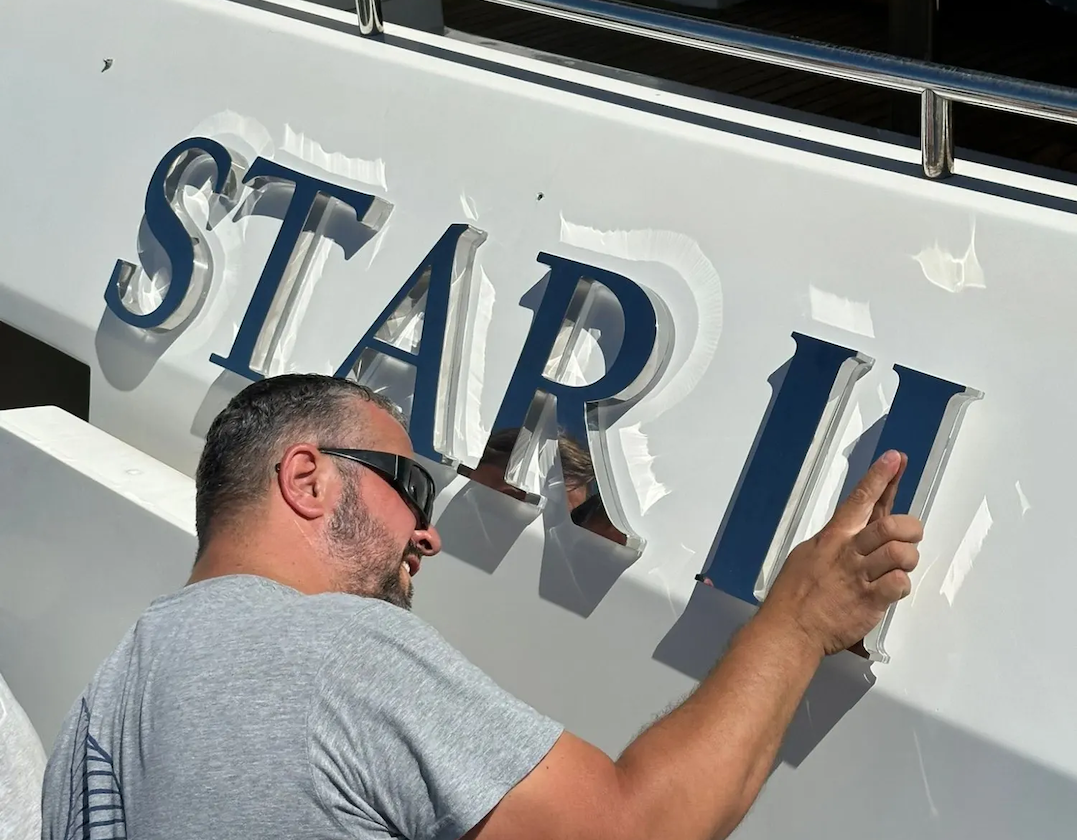
Yacht lettering sits at the intersection of branding, regulation-minded readability, and hardware that survives salt, UV, and vibration. What buyers call a trend is often a slow shift toward finishes and lighting that look refined in daylight and credible at night. This article summarizes common directions we see across custom projects heading into 2026. It is practical guidance and industry observation, not a single forecast for every fleet or region.
For alloy choices and lifecycle comparisons, pair this piece with our best materials for yacht exterior signage guide.
Written by: Custom Yacht Sign Technical Team
Published: May 9, 2026 | Last updated: May 9, 2026
Durability First, Daytime Presence Second
Three-dimensional metal lettering remains the visual shorthand for premium exterior signage. Marine-grade stainless continues to anchor that lane because it communicates solidity from across the dock. Finish direction matters as much as alloy: brushed or satin surfaces often feel quieter under harsh sun, while mirror polish delivers maximum flash when the styling supports it.
Many owners still specify illumination, yet daylight perception increasingly drives the design conversation. Matte and satin treatments that hold contrast against gelcoat or painted hulls are discussed alongside classic mirror polish. When you compare alloys and coatings in depth, start with 316L stainless steel and the finish pages for mirror and brushed builds.
Typography: Thin Lines, Strong Silhouettes
Contemporary yacht names favor modern sans-serif families with disciplined stroke weight and generous interior counters. Extreme ultra-light weights can struggle at distance or when backlighting exaggerates halation, so successful specs balance elegance with legibility.
- Letter height: scale to viewing distance and freeboard; undersized names disappear in busy harbors.
- Spacing: track titles so clusters like AW or LV remain distinct when fabricated in metal.
- Stroke consistency: thin strokes look refined but need adequate thickness for welding, studs, and LED routing when lit.
Lighting as Layering, Not Decoration
LED-backed or halo-lit stainless remains a premium combination when assemblies are sealed for marine duty and optics are tuned for even glow rather than hotspots. Owners frequently evaluate halo versus face-lit effects based on how much spill they want on the transom at night and how the sign reads when lights are off during the day.
Walk through effect vocabulary and electrical considerations on our lighting options page, and review illuminated yacht signage if you want the full LED integration picture before fabrication.
Nautical Graphics With Restraint
Compass roses, anchors, and helm-inspired marks still appear beside vessel names when owners want heritage cues or a logo lockup. The trend worth copying is editorial restraint: one motif scaled to support the wordmark instead of competing at equal weight. Negative space around graphics preserves the premium calm that minimal typography establishes.
Retro and Playful Lanes (Optional, Not Universal)
Some custom programs revive bolder palettes, thicker display lettering, or nostalgic graphic treatments reminiscent of late twentieth-century boat graphics. These reads work well when the hull art, tender, or crew uniforms lean into the same story. They are not replacing restrained typography fleet-wide; treat them as personality-led exceptions that still require marine-safe fabrication.
Brand Continuity Across Hull and Interior
Strong projects align exterior lettering with interior placards, electronics overlays, and documented logo usage so the yacht reads as one brand system. Bring reference imagery or Pantone notes when you engage fabrication so stainless finish direction and optional accent lighting stay coherent with paint and upholstery decisions.
Explore capabilities on products and review installation realities via yacht sign fitting before locking artwork.
Checklist Before You Order
- Confirm mounting substrate, clearance, and whether insulation or backing plate requirements apply.
- Choose finish direction for daytime contrast against your hull color.
- Decide if lighting is mandatory for operations or optional for ambiance.
- Validate letter height against marina sightlines and photography angles you care about.
- Share vector artwork or approve a fabrication-ready redraw early.
- Plan maintenance access consistent with our stainless maintenance guide.
FAQ
Are minimalist yacht signs still the default choice?
Clean typography and restrained detailing remain the mainstream direction because they read well from a distance and age gracefully. Bold accents are usually applied through proportion, finish, and subtle lighting rather than busy ornament.
Mirror vs brushed stainless: which reads more contemporary?
Both are widely used. Brushed and satin finishes often feel understated in bright sun and hide fine wear; mirror polish reads sharper and more reflective. The contemporary choice is less about one finish winning globally and more about matching hull color, superstructure lines, and maintenance expectations.
When does LED illumination make sense for exterior lettering?
LED makes sense when night identification, marina presence, or halo depth matters and when the installation can be sealed and serviced properly. Quality differences show up in optical consistency, glare control, and marine-rated assemblies rather than raw brightness alone.
How much nautical artwork belongs next to a yacht name?
Treat compass roses, anchors, and helm motifs as supporting elements. One strong graphic or a small integrated mark usually reads better than competing with the name at similar visual weight. Scale graphics to the transom or arch so the wordmark stays primary.
What should I decide before requesting a quote?
Finalize approximate letter height, mounting surface material, finish preference, lighting intent if any, and how the sign should align with hull graphics or interior typography. Photos and rough dimensions reduce rework and speed accurate proposals.
Related Pages
Ready to Translate Trends Into Your Project?
Send hull photos, approximate dimensions, and finish preferences. We will help you balance readability, lighting, and long-term marine durability.