

At dusk, the yacht name either settles into quiet elegance—or becomes part of the evening light story with the rest of the hull. Choosing RGBW vs single color LED is less about “more features” and more about how you want guests, tender crews, and marina neighbors to experience the vessel after sunset. Single-color warm or cool white delivers a refined, readable halo; RGBW adds intelligent color that can coordinate with underwater and courtesy ambiance for a modern, high-tech arrival. Whether you are locking a naval architect specification, planning a yacht refit, or comparing quotes from a shipyard sign supplier, this guide helps you pick the glow that fits the boat—not only the brochure.
What Single-Color LED Delivers on the Transom
Single color LED yacht lettering uses one fixed CCT or hue behind marine-grade stainless forms. The goal is even diffusion, maximum legibility, and a glow that feels intentional rather than theatrical.
- Warm white: soft, hospitality-like tone that pairs with teak, varnish, and classic salons.
- Cool white: crisp architectural edge that suits dark gelcoat, geometric fonts, and contemporary flybridge programs.
- Static accents: blue, soft red, or green when brand identity demands a signature hue without a controller menu.
For night approach and dock recognition, a disciplined single-color halo often outperforms busy color cycling—see LED yacht lettering for night approach. Owners who want the name to read as jewelry, not as entertainment, usually start here.
What RGBW Adds: White Quality Plus Color Intelligence
RGBW systems combine red, green, and blue diodes with a dedicated white channel. That fourth channel matters: pure warm or cool whites stay cleaner than “RGB-mixed white,” which can look pastel or uneven on stainless returns. With a marine controller, RGB light show lettering can hold a static white for weeknights, then shift into coordinated scenes when underwater lights, deck wash, and swim-platform accents come alive.
- Static elegance on demand: park on warm or cool white most nights.
- Event modes: soft teal, violet, or brand colors for charter arrivals and owner celebrations.
- Hull sync: match or complement underwater ambiance so the name participates in one lighting composition.
Browse broader glow directions in yacht signage design trends for 2026, then decide whether color is a primary story or an occasional accent.
RGBW vs Single Color LED: Side-by-Side
Use this comparison when owners, captains, and the yard electrician align on a lighting options package before fabrication.
| Criteria | Single-color LED | RGBW LED |
|---|---|---|
| Visual character | Timeless, restrained halo—warm or cool white elegance | Flexible: pure white plus color scenes for a tech-forward presence |
| Best vessel fit | Classic timber, explorer ops, owners who prefer set-and-forget | Modern sport yachts, charter programs, vessels with active ambiance lighting |
| Control complexity | Simple on/off; optional dimming | Controller, scenes, and often amplifiers on longer runs |
| White quality | Excellent when CCT is specified correctly | Excellent when the W channel is used—not RGB-mixed white alone |
| Hull ambiance sync | Match by choosing the same Kelvin family | Can share scenes and protocols with underwater / deck RGBW systems |
| Electrical planning | Fewer channels; easier load sheet | Must match voltage and controller current—see 12V/24V notes below |
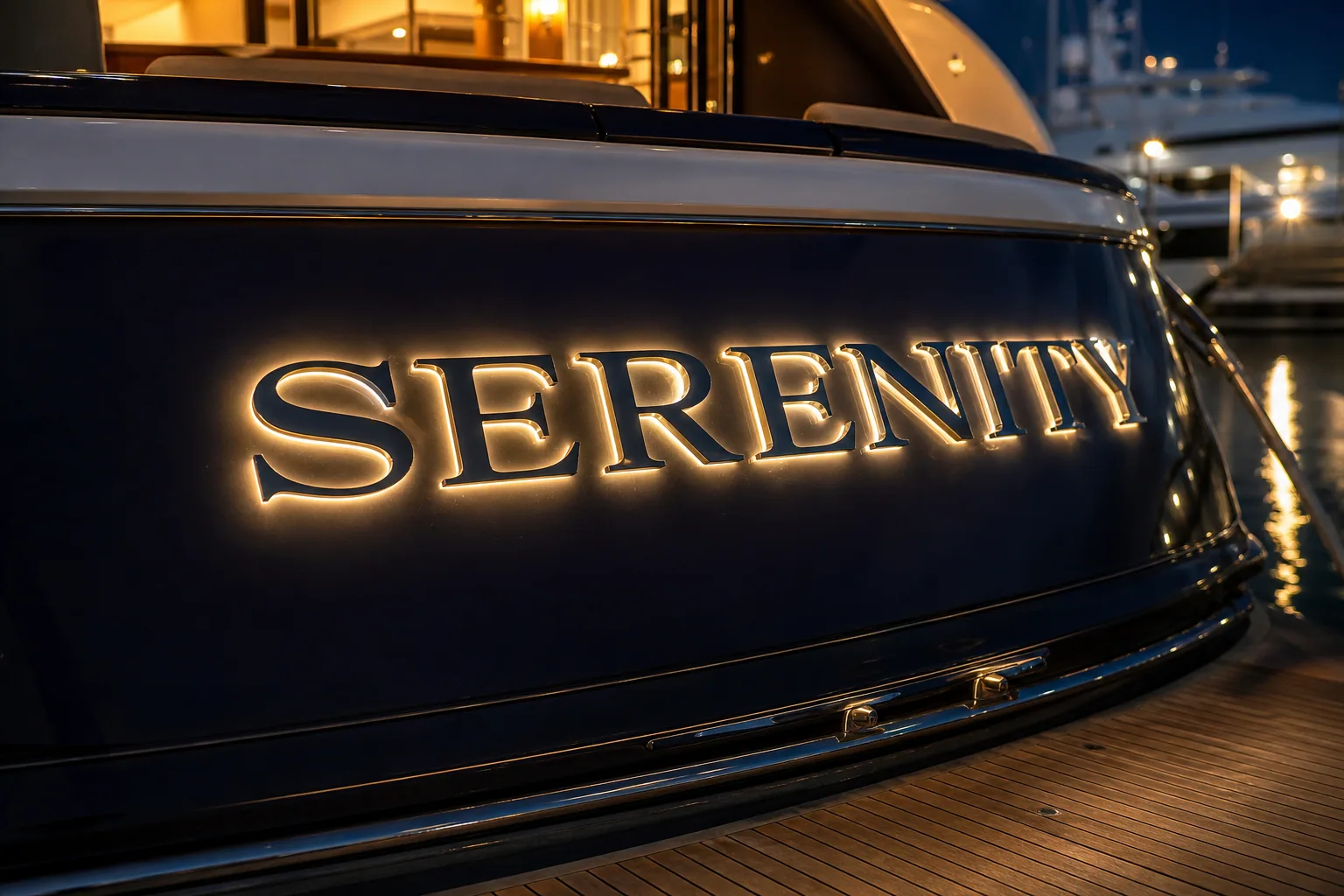
Warm white single-color glow—quiet elegance and dock readability. Single Color LED.
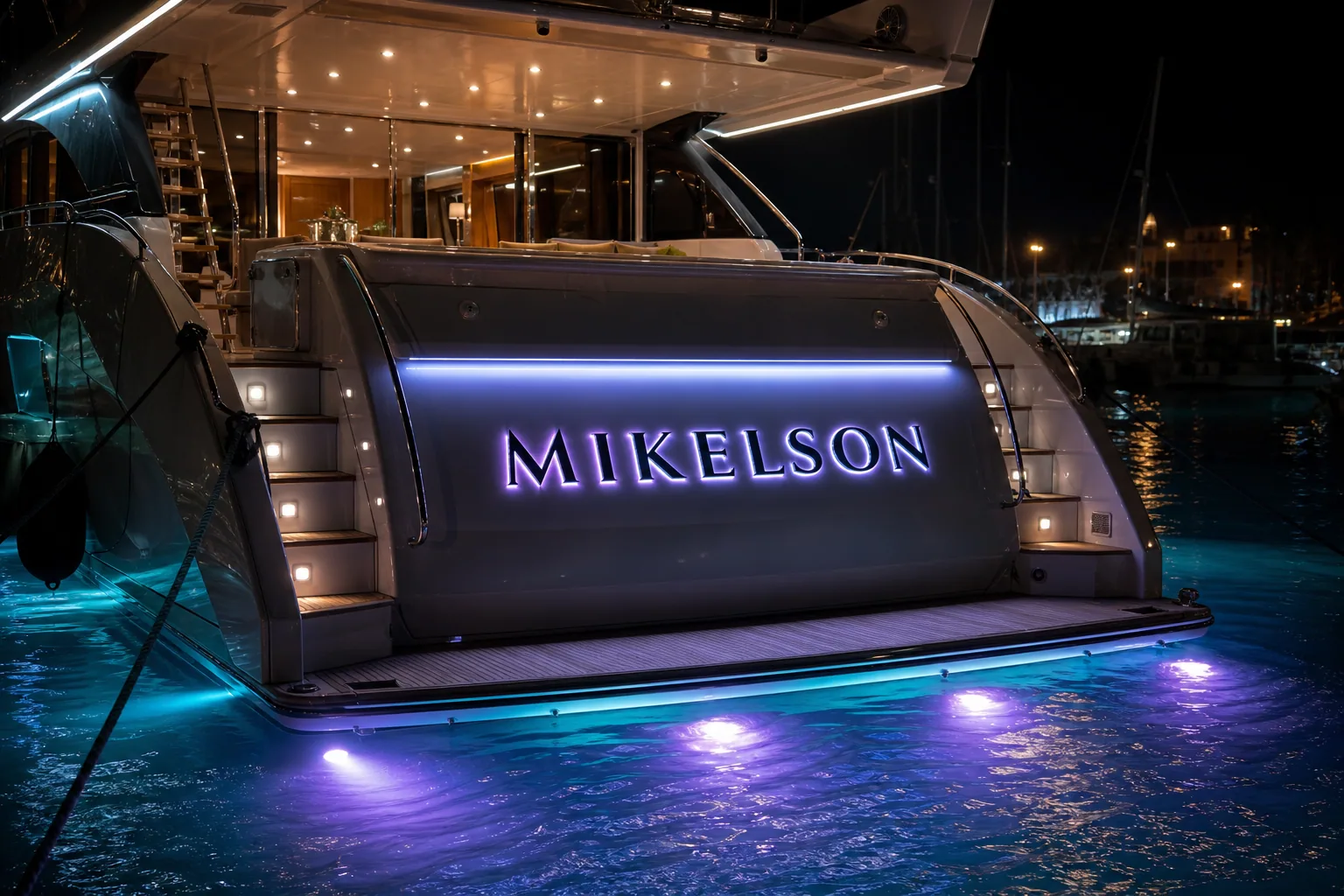
RGBW lettering synced with hull ambiance for a modern night presence. RGB Light Show.
Warm White vs Cool White: The Elegant Baseline
Even owners who later choose RGBW should pick a default white they trust. That default becomes the nightly “house look” and the fallback when guests prefer calm over color.
- Warm white: flatters cream hulls, timber brightwork, and heritage interiors; reduces harsh glare in stern-to Med berths.
- Cool / neutral white: sharpens modern sans letterforms on navy or black gelcoat; aligns with cool salon cove lighting.
- Match the vessel story: finish and glow should agree—mirror modern programs often want cooler halos; brushed classic programs usually want warmer ones. See matching yacht signs to boat aesthetics.
Daytime presence still comes from 316L forms and finish; night presence comes from sealed illumination in an illuminated yacht signage build—do not ask LEDs to fix a low-contrast font or finish choice.
RGBW and Hull Ambiance: Designing One Night Composition
The technology pitch for RGBW is not rainbow cycling for its own sake. It is the ability to treat the name as part of the vessel’s exterior lighting architecture—underwater lights, courtesy strips, and lettering as one composition.
- Hierarchy: keep the name readable; let underwater color carry drama while letters rest on white or a soft matching accent.
- Scenes, not chaos: define three presets—operational white, soft brand accent, and event mode—rather than infinite remote fiddling.
- Protocol and voltage: controllers, amplifiers, and letter modules must share one DC family; mixed 12V/24V packages fail early. Review 12V vs 24V LED systems on luxury vessels.
- Waterproofing: more channels mean more terminations—insist on potting and sealed harnesses as in marine-grade LED waterproofing (IP67 vs IP68).
A capable custom yacht sign brief lists controller location, IP rating, default white CCT, and which ambiance zones should sync before CAD freezes.
Decide whether your name should whisper elegance—or join the hull light show.
How to Choose: A Practical Decision Path
Walk owners and captains through these questions in one meeting—not after LEDs are potted:
- Is the primary goal dock readability and quiet luxury, or programmable evening atmosphere?
- Do underwater or deck RGBW systems already exist (or are they in the same refit package)?
- Will crew manage scenes weekly, or do they want a single switch?
- Does the aesthetic brief lean classic/explorer or modern/charter-forward?
- Is panel capacity and cable path ready for multi-channel control, or is a simple fused feed wiser?
If answers favor simplicity and timeless photos, specify single-color warm or cool white. If answers favor coordination with hull ambiance and occasional event modes, specify RGBW with a dedicated white channel and documented presets. Either path still needs marine sealing, correct voltage, and a layout proof against the real transom—not only a render.
Spec Checklist for Owners, Captains, and Shipyards
Add these lines to the refit folder or naval architect package before fabrication:
- Lighting family: single-color (list CCT/hue) or RGBW (list default white + allowed scene colors).
- Controller intent: none / dimmer / RGBW marine controller; mounting location and IP rating.
- Sync scope: lettering only vs shared scenes with underwater / courtesy lights.
- System voltage (12V or 24V), fuse size, and estimated cable run to the furthest letter.
- Diffusion and stand-off notes so the halo stays even without hotspots.
- QC photos: daytime finish + night glow before crating.
When those items are locked, fabrication becomes selection—and the glow on the vessel matches the story you meant to tell.
FAQ
What is the difference between RGBW and single-color LED yacht lettering?
Single-color LED lettering uses fixed-color diodes—typically warm white, cool white, or a static accent—for a consistent, refined halo. RGBW adds red, green, blue, and a dedicated white channel so you can hold pure whites or shift into coordinated color scenes with a marine controller. Choose single-color for timeless elegance; choose RGBW when the name should participate in evening light shows with hull ambiance.
Is warm white or cool white better for yacht name signs?
Warm white (around 2700–3000K) reads softer and more classic beside teak, cream topsides, and heritage interiors. Cool white (around 5000–6500K) feels sharper and more architectural on modern dark hulls. Match the letter Kelvin to salon cove and exterior courtesy lighting so night photos feel like one vessel—not a mismatched accent on the transom.
Can RGBW yacht lettering sync with underwater hull lights?
Yes, when controllers, voltage, and control protocol are specified as one marine package. Many owners park the name on a static white or soft accent while underwater lights run a scene, then briefly unify colors for arrival moments. Confirm IP-rated controllers, amplifier placement, and that letter modules match the same 12V or 24V family as the ambiance circuit.
Is single-color LED more reliable than RGBW on a yacht?
Both can be marine-reliable when modules are potted, harnesses sealed, and voltage matched. Single-color systems are electrically simpler—fewer channels and usually fewer controller failure points—so they suit owners who want set-and-forget readability. RGBW adds capability, not automatically fragility, but it does require disciplined wiring, controller location, and waterproofing during the yacht refit electrical plan.
Which glow should I choose for a classic versus modern yacht?
Classic timber and heritage programs usually favor warm single-color halo for quiet elegance. Streamlined modern and party-forward charter vessels often prefer RGBW so the name can rest in cool white by day-to-night transition, then join hull ambiance for events. Explorer yachts typically keep operational warm or neutral single-color glow and treat color shows as optional, not primary.


