

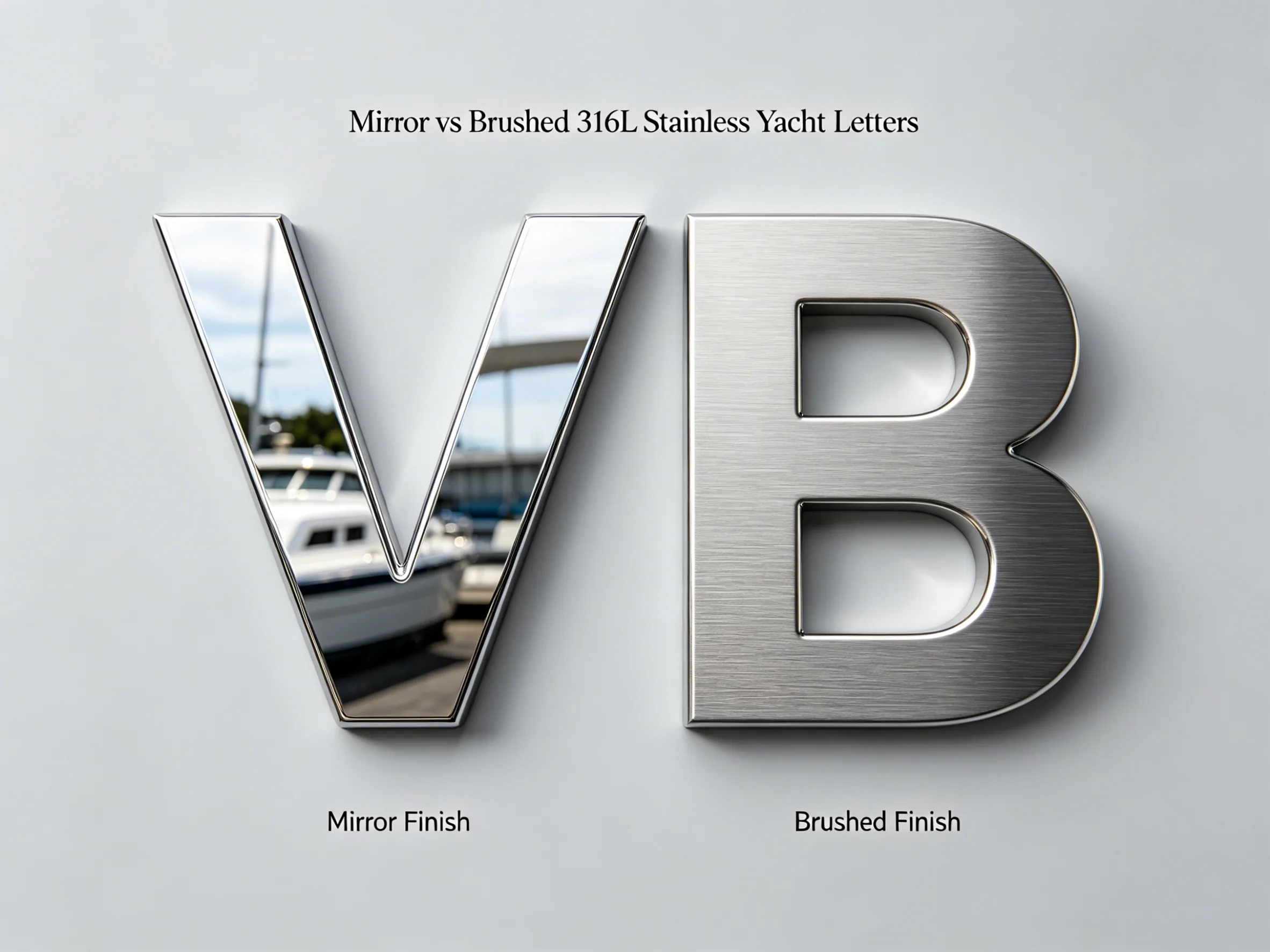
Once you have committed to 316L stainless for the wordmark, the next decision that shapes every dock photo is surface finish: mirror polish or directional brush. Both are marine-grade when fabricated and mounted correctly—the difference is optics, maintenance cadence, and how the name behaves in harsh sun, busy harbors, and optional LED layers.
This guide stays in the finish lane. For substrate comparisons (aluminum, acrylic, vinyl), read best materials for yacht exterior signage. For salt-season polishing habits, pair this article with how to maintain stainless steel boat letters.
Written by: Custom Yacht Sign Technical Team
Published: May 20, 2026 | Last updated: May 20, 2026
Why Finish Choice Is Not Cosmetic Only
Letter height and contrast still dominate legibility, but finish controls how light skims the transom at 10:00 in a Caribbean anchorage or when you are stern-to in a Med marina. Mirror surfaces throw specular highlights that can help a name pop off dark navy paint—or create glare in broker listing photos. Brushed grain gives a quieter luxury read and can forgive fine handling marks, yet it needs consistent grain direction across every character.
Captains and owners who treat finish as part of the operational brief—not only the interior mood board—avoid expensive rework after the first charter season photos land.
Mirror 316L: Maximum Presence, Higher Visibility of Imperfection
Mirror polish is the classic superyacht transom look: crisp edges, high reflectivity, and strong separation on deep hull colors. It pairs naturally with formal serif or restrained sans wordmarks where the name should read as jewelry against dark gelcoat or teak cap rails.
Trade-offs are practical. Salt film, fender scuffs, and early tea staining show quickly on a mirror face. Crew should plan shorter inspection intervals in heavy spray programs and avoid abrasive pads that cloud the polish. Review product details on mirror stainless steel yacht signs before you lock halo or face-lit concepts.
Mirror often wins when: the hull is dark blue, black, or charcoal; the owner wants maximum dock presence; photography and charter marketing favor high contrast; and the crew can support a disciplined rinse-and-polish routine.
Brushed 316L: Restrained Daytime Read, Forgiving Grain
Brushed finishes align with contemporary trends toward quieter daytime branding—see also yacht signage design trends for 2026. Directional grain diffuses harsh specular spikes, which can help in white or light-grey hull programs where mirror letters risk washing out against bright paint.
Fabrication note: confirm brush direction and whether edges are softened or sharp. Mixed layouts (brushed name, mirror accent line) only work when hierarchy is intentional. Explore brushed stainless steel yacht signs alongside gallery examples on portfolio.
Brushed often wins when: the transom is white or light grey; owners prefer understated elegance; the program expects frequent dock contact; or you want less hotspot risk when layering LED later.
Hull Color and Photography: A Simple Decision Matrix
Use this as a starting frame—not a rigid rule—then validate with phone photos at your actual berth angle:
- Dark navy / black transom: mirror usually maximizes separation; brushed needs generous stroke weight.
- White or light grey hull: brushed often balances better; mirror may need larger height or outline strategy.
- Teak-heavy stern with dark glass: test glare at sunset; mirror plus varnished teak can produce hot spots in wide-angle shots.
- Busy harbor visibility: cross-check letter height guidance in busy season transom visibility regardless of finish.
LED, Halo, and Finish Interaction
Illuminated programs add another optical layer. Halo glow can outline brushed faces with a soft rim, while mirror faces may compete with specular reflections unless standoff depth and diffusion are tuned. If night identification matters, read LED yacht lettering for night approach and vocabulary on lighting options before you freeze finish and lighting together.
Single-color warm white remains the most common pairing for timeless evening presence—see single-color LED yacht letters when electrical planning starts early in a refit.
Maintenance and Lifecycle Cost
First fabrication cost between mirror and brushed is often closer than owners expect; lifecycle difference shows up in crew time. Mirror demands more frequent cosmetic attention to keep broker-ready shine. Brushed tolerates a slightly looser cosmetic window but still requires freshwater rinse after salt spray and correct cleaners—never steel wool on either finish.
Budget the polishing line item in yacht operating budgets for exterior signage when you model total cost of ownership, not only the quote for letters.
Refit Timing: When to Decide Finish
Finish choice should be locked before paint spray and template measurement—not after letters arrive at the yard. If you are repainting the transom, align color chips, finish samples, and LED penetrations in one drawing set. Follow sequencing guidance in refit yard timing for custom lettering and mounting notes on yacht sign fitting.
Send straight-on transom photos, port and starboard context shots, and your target finish reference from how it works so proofs reflect real geometry—not a generic render.
FAQ
Is mirror or brushed stainless better on a dark blue hull?
Mirror 316L often pops against deep navy or black transoms because specular highlights separate letterforms from dark paint. Brushed can still read well with generous stroke weight and height. Photograph both against your actual gelcoat under midday sun before you freeze artwork.
Does brushed stainless hide scratches better than mirror?
Brushed grain can disguise fine handling marks better than a mirror face, which shows every swipe immediately. Neither finish removes the need for correct stud torque and fender discipline. See the stainless maintenance guide for tea staining and safe cleaners.
Can you mix mirror and brushed on one yacht name?
Yes, when hierarchy is intentional—for example mirror for the wordmark and brushed for a registry line. Confirm brush direction on all brushed characters so the transom reads cohesive from the dock.
Which finish works better with LED halo lighting?
Both can work; mirror may produce sharper specular competition with glow unless optics are tuned. Brushed often yields a softer evening read with less hotspot risk. Coordinate finish with your integrator using illuminated yacht signage references.
How often should mirror vs brushed yacht letters be polished?
Mirror usually needs shorter inspection intervals in heavy cruising programs. Brushed still needs routine rinse and periodic grain-consistent refresh. Document baseline photos at delivery for warranty and refit history.
Related Pages
Send Hull Photos and Finish References
Share transom color, target finish (mirror or brushed), and whether LED is in scope. We will align 316L fabrication, proof artwork, and mounting with your yard schedule.