

A yacht’s name is the first thing the harbor reads—and the last thing guests forget. How to choose a superyacht name is equal parts identity, maritime custom, and practical judgment: will it clear radio traffic, survive a registry check, and still look intentional when cut in 316L on the transom? Whether you are naming a new build, planning a yacht refit rename, or briefing a shipyard sign supplier, this guide covers traditions, superstitions, and etiquette before anyone freezes artwork for a custom yacht sign.
Why a Superyacht Name Is More Than Decoration
On a luxury vessel the name is a marque. It appears on AIS displays, charter briefs, broker listings, crew uniforms, and every dock photograph. A clever pun that works in a WhatsApp thread can fail when a night tender calls the stern, or when the wordmark must sit in a quiet rectangle beside a swim platform.
- Identity: the name should match the vessel’s story—explorer, classic motor yacht, or sleek dayboat—not fight the lines.
- Operations: captains and bridge teams need a word that is easy to spell phonetically on VHF.
- Compliance: documented vessels still need legal marking for name and hailing port. Lore does not replace flag rules—confirm details in legal requirements for yacht names and ports of registry.
- Craft: once metal is cut, a rename is a yard job, not a font change in Keynote.
Treat the name as a systems decision early—the same way you would freeze voltage or hull color—so layout proofs and letter heights are sized to a final string, not a placeholder.
Maritime Naming Traditions That Still Shape Superyachts
Yachting inherited naming habits from working fleets and naval custom. Not every owner follows them, but yards and brokers still recognize the patterns—and guests still feel when a name “belongs” on a hull.
- Feminine tradition: many vessels are referred to as “she,” and feminine or goddess names remain common on private yachts. It is custom, not law—modern programs freely use place names, abstract nouns, or invented marques.
- Family and lineage: combining surnames, children’s initials, or a house crest into the wordmark. If a crest sits with the letters, brief it with custom logos, crests, and emblems so the marque stays one system.
- Place and voyage: harbors, islands, and latitudes that mark a first season or a home port—short enough to read from the dock.
- Virtues and aspirations: serenity, freedom, patience—elegant when the typeface is restrained; crowded when the word is long and the transom is busy.
- House series: numbered or sequential names for owners with multiple vessels (e.g. a family root plus a Roman numeral). Keep the type family consistent across the fleet.
Whatever tradition you lean on, freeze spelling, spacing, and punctuation before font debates start. Script versus sans is a separate identity call—settle it with script vs sans-serif guidance for yacht names so the word and the letterforms agree.
Superstitions: Renaming, Christening, and “Bad Luck” Lore
Maritime superstition is social glue more than physics—but it still governs ceremonies, crew morale, and how a rename feels on board. Respect the ritual even if you treat luck as optional.
- Renaming caution: old lore says a vessel keeps her first name’s spirit. Practical crews purge the previous name from logbooks, soft goods, and AIS before unveiling the new one—then celebrate cleanly rather than half-erasing the past.
- Christening: breaking a bottle (safely, with a scored bottle and a clear swing arc) or a formal blessing remains common at launch or after a major rename. Invite the people who will live with the name: owner, captain, and often the yard team that fitted the letters.
- Avoid recycling a bitter history: reusing a name tied to a hard loss, a litigation story, or a notorious casualty in the same basin can unsettle crew and guests—even when the registry allows it.
- Numbers and omens: some owners avoid certain numerals or dates; others embrace them. Decide consciously; do not discover the taboo after the stud map is cut.
- Never mock the sea in the name: jokes about sinking, storms, or unpaid marina bills age poorly on a luxury stern.
When a rename is part of a larger exterior package, sequence vinyl removal, gelcoat repair, and new metal letters like any other refit trade—see upgrading vinyl boat names to LED signs—so the superstition ceremony lands on a finished transom, not a ghosted film outline.
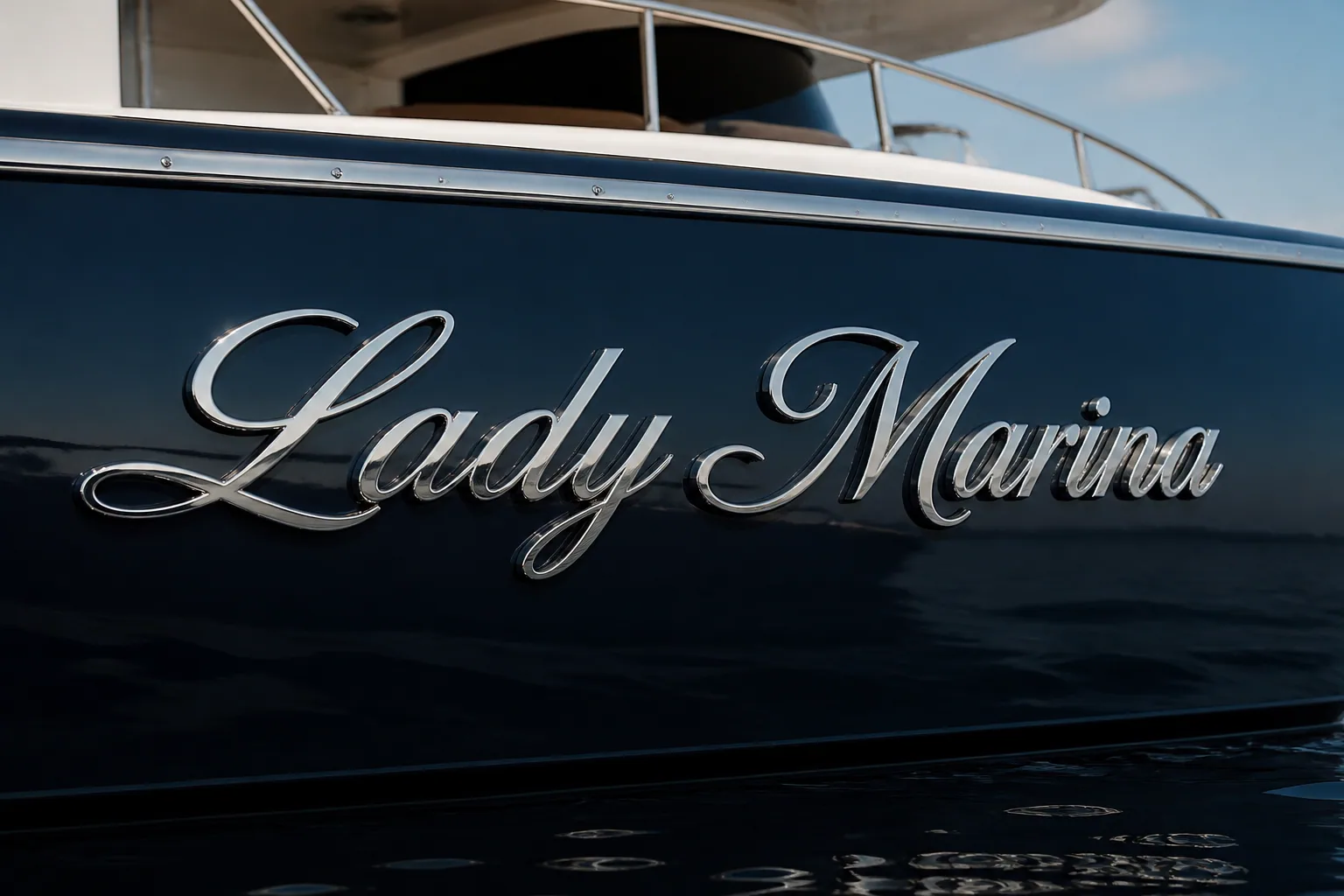
Tradition still favors names that sound intentional at the dock—and read cleanly in metal. Mirror Stainless Steel.
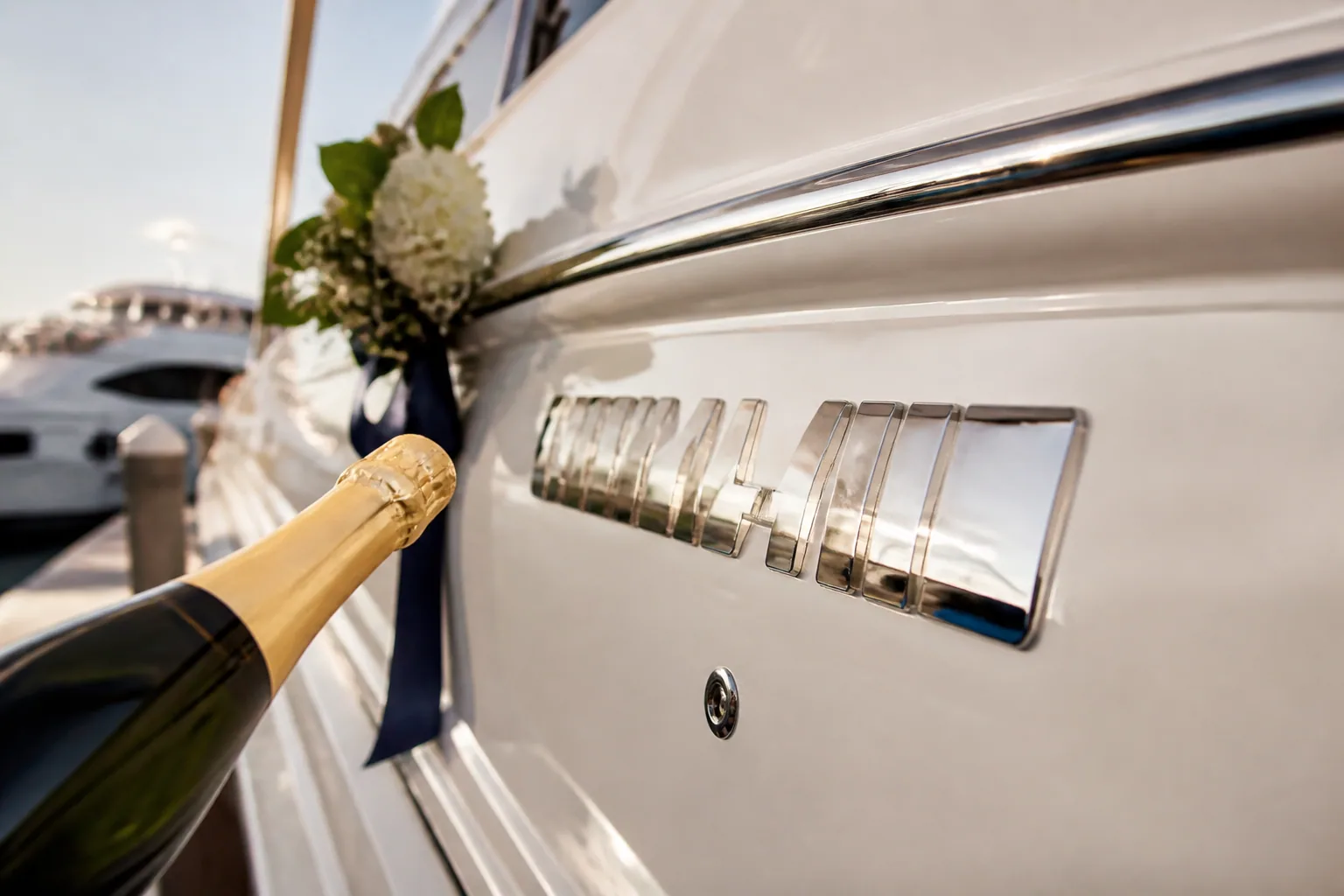
Christening etiquette pairs the ceremony with a finished name—not temporary vinyl. Backlit Yacht Signs.
Etiquette for Owners, Captains, and Guests
Good naming etiquette protects the vessel’s reputation as much as any polish routine.
- Check uniqueness early: search registries, marina directories, and major charter platforms. A duplicate name in the same cruising ground creates radio confusion and awkward dock conversations.
- Respect the previous name during transition: until paperwork and AIS update, crew should know which call sign is active. Do not leave two competing identities on soft goods and the stern.
- Charter discretion: some owners prefer a private name for family use and a separate charter marketing name. If both exist, keep legal hull marks aligned with the documented identity.
- Radio manners: teach guests the phonetic spelling once. A beautiful invented word that nobody can pronounce becomes a liability on a busy VHF channel.
- Credit the vessel, not the ego alone: names that only encode a joke about the owner’s career can feel thin when the yacht is photographed in a world-class anchorage.
Placement still follows hierarchy: legal hull mark first, then optional quarters or flybridge branding. Review yacht name placement on transom, quarters, and flybridge before you promise the name “everywhere.”
Traditions vs Modern Practice
Use this comparison when an owner wants “something traditional” and the captain needs a name that works on passage.
| Theme | Traditional lean | Modern lean |
|---|---|---|
| Gendered language | Feminine or goddess names; “she” in speech | Places, abstracts, invented marques; gender-neutral nouns |
| Rename ritual | Full purge + christening before first season | Documented AIS/registry update + crew brief; ceremony optional |
| Length | Short, spoken names that fit a classic stern | Still short—long wordmarks fight reverse transoms and LED stud maps |
| Crests | House flag or family emblem beside the name | Minimal wordmark; crest only if brand identity requires it |
| Humor | Rare on large private yachts | Acceptable if radio-clear and not crude in mixed company |
Aesthetics should still match the vessel—classic script on a teak-heavy motor yacht, clean sans on a carbon explorer. Align the story with matching yacht signs to boat aesthetics.
Name frozen? Send spelling, hull photos, and finish intent—we will return a layout proof before metal is cut.
A Practical Checklist Before You Commit
Run this list with the owner and captain before the fabricator opens a drawing file.
- Say it aloud on a simulated VHF call. If the bridge stumbles, shorten or respell.
- Check registries and local marina directories for collisions in your cruising ground.
- Confirm legal string and hailing port for the documented identity—not a nickname.
- Count characters for the quiet transom rectangle. Long names force smaller heights or awkward stacking.
- Decide crest yes/no and whether it shares the letter finish.
- Freeze font and finish (mirror vs brushed) as one marque across planes.
- Plan the rename ceremony after install so photos show finished metal, not temporary film.
- Update AIS, soft goods, and stationery in the same week the stern changes.
When the string is final, specify marine-grade letters—typically 316L stainless steel—so the name you christened still reads as craft after seasons of salt and washdowns. Illuminated options under illuminated yacht signage turn night approaches into the silhouette guests remember.
From Chosen Name to Finished Letters
Choosing the word is the romance; fitting it is the craft. A coherent program locks spelling, type, finish, and glow before the yard window opens—then installs as hardware, not décor.
- Artwork: outlined vectors of the approved name; no phone photos of napkin sketches as the master.
- Layout proof: full-size mock against hull color and real hardware intrusions.
- Material: 316L faces with a polish routine the crew will keep.
- Glow (optional): sealed halo matched to deck lighting—not a different white on every plane.
Done well, how to choose a superyacht name ends where the harbor begins: a word with tradition behind it, etiquette around it, and metal on the stern that earns every glance from the dock.
FAQ
Is it bad luck to rename a yacht?
Maritime lore treats renaming cautiously, but there is no physical law against it. Practical crews retire the old name from AIS, logbooks, and soft goods, then christen the new identity cleanly so the vessel does not carry two competing names. The “bad luck” feeling usually comes from a half-finished transition—not from the new word itself.
Should a superyacht name be feminine?
Feminine and goddess names remain a strong tradition, and many crews still say “she,” but it is custom rather than a registry rule. Place names, virtues, family composites, and invented marques are all common on modern superyachts. Choose a name that matches the vessel’s character and is clear on the radio—gendered language is optional.
How long should a yacht name be for the transom?
Shorter is almost always stronger. Long strings force smaller letter heights or awkward stacking around platforms and stairs. Test the word against the quiet rectangle on your hull photos before you fall in love with a seven-syllable phrase. Legal height floors are minima; dock readability usually needs more generous sizing.
Do I need a christening ceremony when I rename?
Not legally. Many owners still hold a short blessing or bottle ceremony for crew morale and guest memory, especially after a major refit rename. Schedule it after the finished letters are installed and photographed so the ritual celebrates the real stern—not temporary vinyl.
What should I check before freezing a superyacht name?
Confirm radio pronunciation, registry and local-directory uniqueness, the legal documented string plus hailing port, character count for the mounting plane, crest yes/no, and font/finish as one marque. Then update AIS and soft goods in the same window the new letters go on.


