

Flat vinyl boat names start as a quick fix and end as a tell: faded edges, adhesive ghosts, and a silhouette that looks temporary on a vessel built for decades. Retrofitting your yacht from vinyl decals to premium LED signs is one of the highest-impact exterior upgrades in a yacht refit—it replaces a disposable film with dimensional 316L letters that read clearly by day and glow on night approach. Whether you are an owner refreshing a broker listing, a captain sequencing yard work, or a designer writing a naval architect specification, this guide covers removal, surface prep, mounting, power, and how to brief a shipyard sign supplier so the new name looks intentional—not bolted on as an afterthought.
Why Vinyl Boat-Name Decals Fall Short
Vinyl is useful for charter fleets and short-term names. On a private luxury yacht, the same film fights UV, salt, washdowns, and dock photography for years longer than it should.
- UV fade and edge lift: color shifts and peeling corners telegraph neglect long before structural systems do.
- No depth, no night presence: flat graphics disappear after sunset; guests and tenders lose the silhouette that illuminated letters provide.
- Residue and ghosting: adhesive shadows remain after peel, forcing fairing or polish before any premium install.
- Resale optics: brokers and buyers read peeling vinyl as deferred maintenance on an otherwise polished topsides package.
If night identification is part of the brief, compare glow strategies in LED yacht lettering for night approach and product options under illuminated yacht signage before you lock a budget line.
Vinyl Decals vs Premium LED Yacht Signs
Use this comparison when owners ask why a sticker “still works” and yards need a clear upgrade rationale for the exterior package.
| Criteria | Vinyl decals | Premium LED signs |
|---|---|---|
| Daytime presence | Flat graphic; depends on hull contrast | Dimensional 316L depth and polish catch light |
| Night approach | Invisible without floodlights | Even halo from sealed marine LED modules |
| Durability | UV fade, peel, adhesive ghosts | Marine-grade metal and potted electronics |
| Install invasiveness | Surface only | Studs/sealant; optional cable penetrations |
| Maintenance | Replace film when it fails | Rinse/polish routines; inspect seals seasonally |
| Perception | Temporary / fleet look | Custom fitting aligned with vessel finish |
Material choices still matter after you leave vinyl behind—anchor alloy decisions with 316L stainless steel and the grade guidance in best materials for yacht exterior signage.
The Retrofit Sequence: From Peel to Commissioning
Treat the upgrade as a small systems job, not a weekend sticker swap. The cleanest programs follow one sequence shared by owner, captain, and yard.
- Document the existing name zone: straight-on and offset photos, tape references, and notes on hardware that intrudes on the letter block.
- Remove vinyl completely: heat, soft scrapers, and approved adhesive removers—never gouge gelcoat to “speed” the peel.
- Repair the mounting plane: clear residue, fair ghosts, polish or paint as required so new letters sit on a true surface.
- Freeze artwork and glow intent: font, finish (mirror vs brushed), single-color vs RGBW, and legal name hierarchy.
- Measure from the finished surface: after fairing/paint cure—not on green primer—then approve a full-size proof.
- Plan power early: dedicated fused 12V or 24V circuit, cable path, and dry controller location while panels are open.
- Install, seal, and commission: stud map, marine sealant, polarity check, day finish photos, and night halo photos.
For mechanical detail once letters arrive, use installing a backlit yacht sign safely and the yard workflow in yacht sign fitting. Schedule fabrication against the broader calendar with refit yard timing for custom lettering so lettering is not the silent critical path.
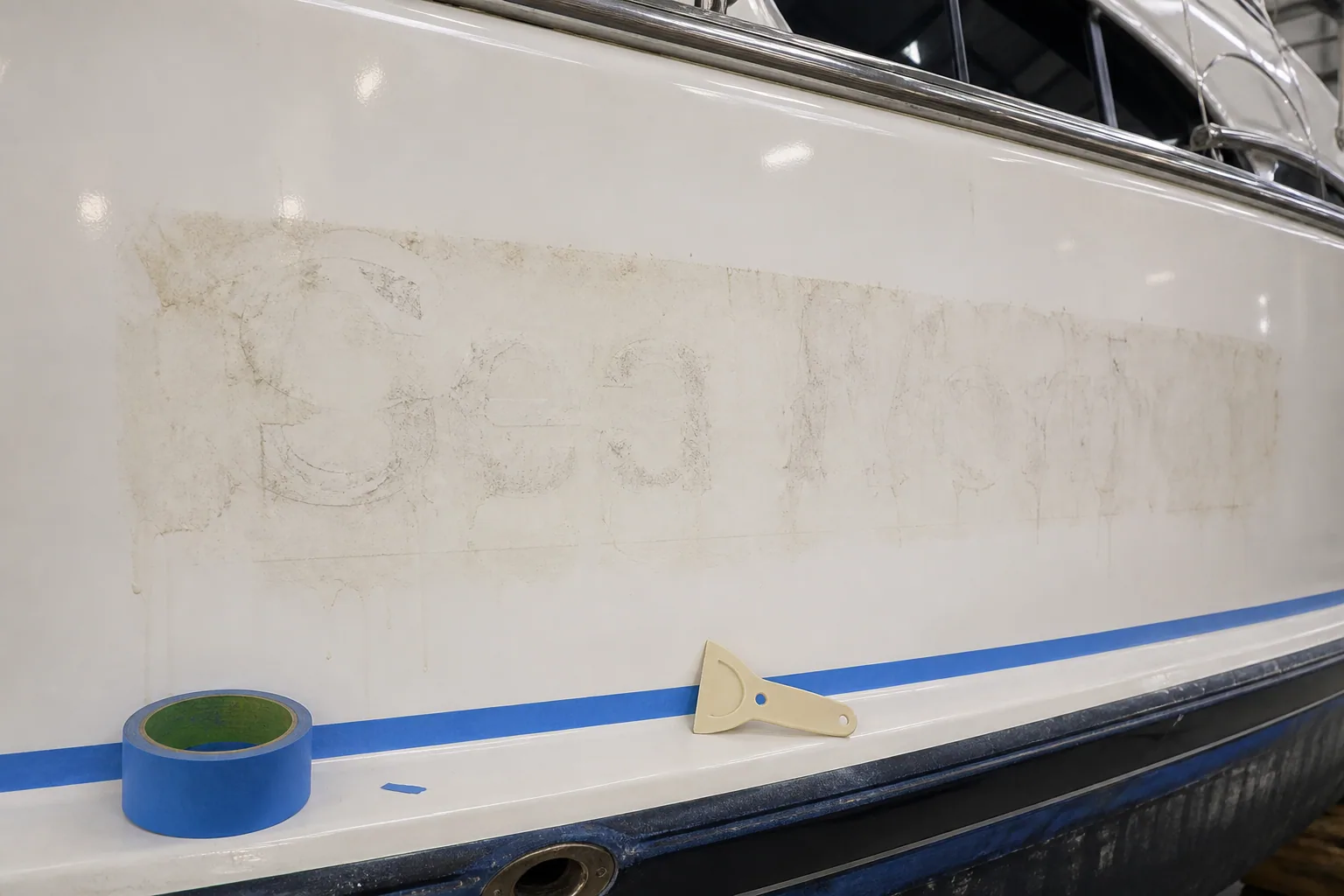
Vinyl removal and adhesive cleanup — the mounting plane must be fair before studs go in. Installation.
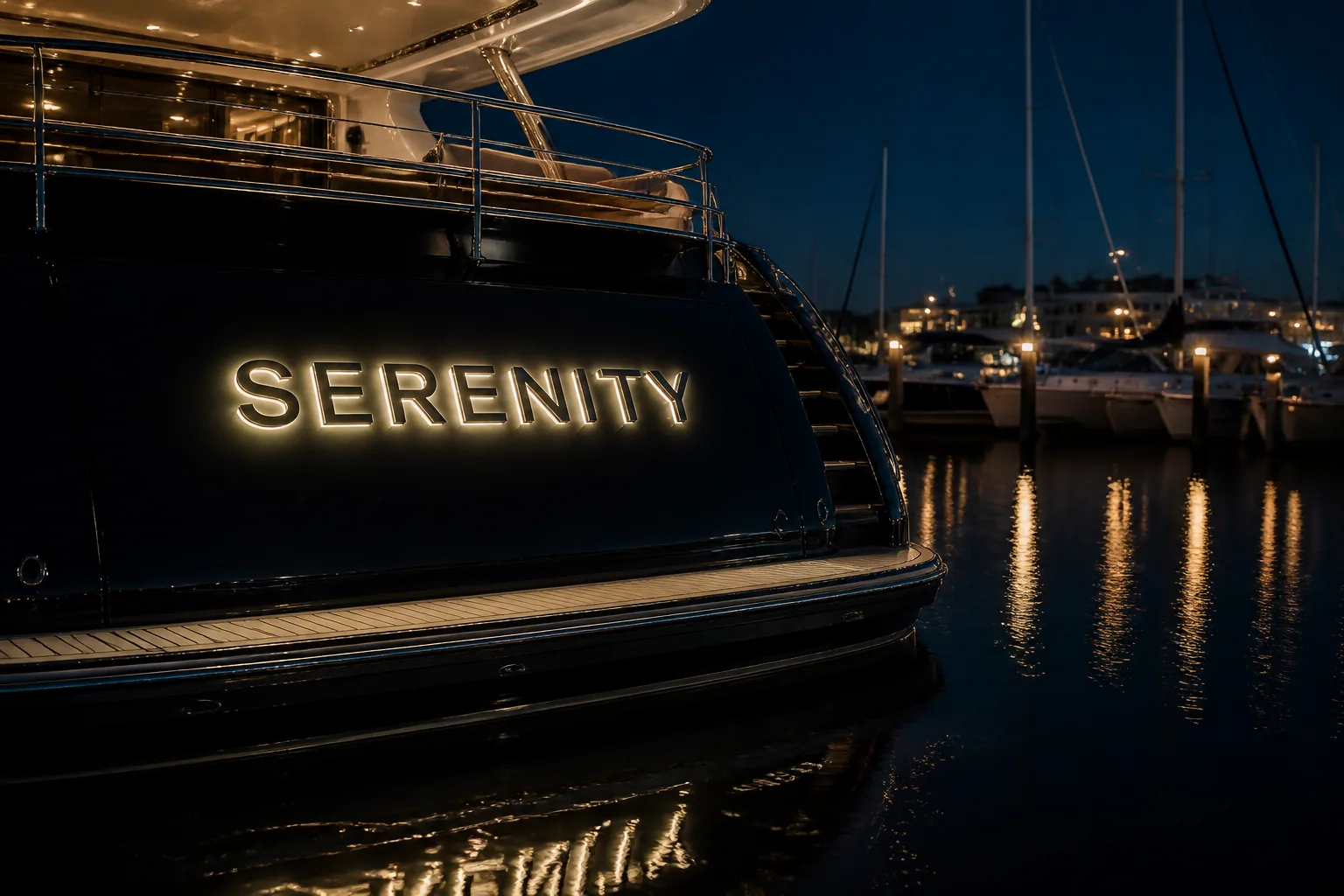
After the upgrade: dimensional letters with a clean night halo instead of a flat film silhouette. Backlit Yacht Signs.
Surface Prep: Ghosting, Fairing, and Paint Windows
The hull remembers vinyl longer than owners expect. Adhesive shadows and UV footprints will outline the old name under a mirror-polished letter if you skip prep.
- Adhesive removal: use marine-safe removers and plastic blades; solvent that attacks gelcoat is a false shortcut.
- Ghost outlines: compound and polish light marks; deeper stains may need local fairing or a paint touch window.
- Color change refits: if topsides are being resprayed anyway, schedule letter measurement after cure so stud patterns match the finished plane.
- Old stud scars: if replacing earlier metal letters plus vinyl patches, fair abandoned holes before the new layout—do not hide failures under larger characters.
A custom yacht sign only looks premium when the substrate is quiet. Rushing peel-to-drill on the same afternoon is how docks spot “refit haste” in broker photos.
Mounting, Power, and Lighting Choices for the Upgrade
Vinyl needed zero penetrations. Premium LED letters need a deliberate mechanical and electrical brief—still modest compared with most refit trades if planned early.
- Stud mounting: follow the fabricator map; seal every hull penetration with marine-grade sealant compatible with gelcoat and stainless.
- Voltage match: specify 12V or 24V to the vessel system—see 12V vs 24V LED systems—and size cable for drop to the furthest letter.
- Glow intent: elegant single-color halos vs programmable color—compare RGBW vs single-color LED and single-color LED packages against deck lighting.
- Finish: mirror for drama, brushed for lower maintenance optics—decide with mirror vs brushed 316L before metal is cut.
- Waterproofing: demand potted modules and sealed harnesses appropriate to washdowns and spray—review IP67 vs IP68 guidance.
Align aesthetics with the vessel story using matching yacht signs to boat aesthetics, and browse glow examples under lighting options when the owner wants proof before PO.
Planning a vinyl-to-LED name upgrade on your next yard period?
Budget, Timeline, and Resale Framing
Illuminated lettering is a small line on a five-year operating budget and a large line in every stern photograph. Frame the spend as durable exterior hardware—not as a sticker replacement with a luxury markup.
- Bundle with paint or electrical: shared scaffolding, open lockers, and one commissioning photo set reduce soft costs.
- Protect lead time: drawing approval, fabrication, QC, and freight need buffers—especially in crowded refit seasons.
- True cost vs film: vinyl looks cheaper until the third peel-and-replace cycle and the polish bill to erase ghosts.
- Listing impact: coherent mirror stainless or brushed programs read as finished systems in daytime and twilight shots.
For spreadsheet context, see yacht operating budgets for exterior signage. When legal name size and registry text still apply after the glow upgrade, confirm hierarchy with legal requirements for yacht names and ports of registry.
Done well, the retrofit leaves no vinyl ghost, no rushed hole pattern, and a name that earns its place on the transom—by day as metal craft, by night as a controlled halo that tells the harbor who just arrived.
FAQ
Can I install LED yacht letters over existing vinyl decals?
No. Remove the vinyl completely, clear adhesive residue, and repair or fair any ghosting or gelcoat damage before mounting new letters. Installing over film traps contaminants, creates uneven stand-off, and leaves an obvious peel outline that shows under daylight and halo light. Treat the hull surface as a finished mounting plane—not a sticker base.
Do I need to repaint the transom when upgrading from vinyl to LED signs?
Not always. Light ghosting can often be compounded, polished, or locally faired if the surrounding finish is sound. Heavy UV fade, deep adhesive staining, or a color change planned in the same yacht refit usually means a broader paint or gelcoat window. Align letter measurement with the finished mounting plane after any fairing or cure schedule—not on green primer.
How long does a vinyl-to-LED yacht sign retrofit take?
Surface prep and vinyl removal may take hours to a few days depending on adhesive and finish repair. Fabrication of custom 316L illuminated letters typically needs drawing approval plus production and shipping buffers measured in weeks. Wire the electrical path during an open-panel refit window when possible; late cable routes cost more than planning them with the yard electrician.
Will premium LED yacht signs work on my existing 12V or 24V system?
Yes, when the letter set is specified to match the vessel DC voltage and a dedicated fused circuit with correct cable gauge. Confirm polarity, voltage drop to the furthest letter, and controller placement in a dry serviceable location before final termination. Mismatched voltage is a common retrofit mistake—align the brief early with your shipyard sign supplier.
Does upgrading from vinyl to illuminated letters improve resale value?
Illuminated 316L lettering rarely moves the brokerage price alone, but it sharpens listing photos, night approach presence, and first-impression quality that buyers and charter guests notice. Flat, peeling vinyl reads as deferred maintenance; a coherent custom yacht sign reads as cared-for exterior systems. Pair the upgrade with clean gelcoat or fresh paint for the strongest visual return.


